

Industrial & Applied Technology
Connect the physical operation to a system the business can understand and control.
Adaptiv Stratum helps examine where equipment, environments, operating knowledge, software, and business records are disconnected, then designs the measured, integrated layer needed to improve decisions and reduce avoidable manual work.
Physical and digital operations
Measure what matters. Connect it carefully. Act within defined control.
Potential environments include production, controlled agriculture, warehouses, equipment fleets, refrigeration, water systems, energy systems, packaging, facilities, and remote infrastructure. The appropriate design depends on the process and the consequences, not a preferred technology stack.
Equipment failure, drift, quality loss, or resource waste is discovered after it affects the operation.
Important conditions are checked manually but never recorded in a form that supports comparison or investigation.
Machines, sensors, maintenance, inventory, scheduling, and financial records describe different parts of the same operation.
Critical operating judgment remains with a few experienced employees and is difficult to transfer or scale.
Five connected layers
From physical condition to accountable action.
The objective is not to add technology at every layer. It is to determine which layer is missing, unreliable, disconnected, or preventing the operation from working effectively.
Physical operation
Machines, crops, facilities, materials, equipment, and the people responsible for the work.
Measurement
Sensors, controllers, cameras, inspections, and existing operating records.
Connectivity
Edge systems, networks, secure telemetry, APIs, buffering, and integration boundaries.
Intelligence
Rules, analytics, anomaly detection, forecasting, machine learning, and carefully bounded AI assistance.
Action
Alerts, work orders, operator decisions, controlled automation, and confirmed operating outcomes.
Engineering designed for real operating environments
Failure behavior is part of the design.
A sensor can drift, a network can fail, a controller can lose connectivity, and a model can make a poor prediction. The system should define what remains local, what becomes unavailable, how uncertainty is shown, and how safe operation and recovery are maintained.
Fail-safe behavior
Define the safe or recoverable state before connectivity, sensor, software, or model failure occurs.
Local continuity
Keep critical local functions independent of continuous cloud access where the operation requires it.
Validated measurement
Check identity, units, range, freshness, calibration context, and plausibility before data drives a decision.
Deterministic authority
Keep interlocks, operating limits, approvals, and consequential actions in the appropriate control layer.
Traceable operation
Record material conditions, decisions, changes, alarms, acknowledgements, and resulting outcomes.
Recovery and handoff
Document ownership, dependencies, backups, manual operation, rollback, support, and future maintenance.
How we engineer it
From operating need to supportable system.
Each stage produces evidence for the next. A project can stop, narrow, or change direction when the evidence does not support the original assumption.
Understand
Map the physical process, failure modes, constraints, responsibilities, and business objective.
Instrument
Determine which conditions actually need measurement and what evidence makes each reading trustworthy.
Connect
Move useful data reliably between equipment, edge systems, applications, and business platforms.
Analyze
Establish baselines, expose relationships, quantify performance, and model only where evidence justifies it.
Control
Apply rules, automation, operator review, and approval at the level appropriate to the consequence.
Validate
Test normal behavior, edge cases, sensor faults, connectivity loss, recovery, and acceptance conditions.
Operate
Monitor health, preserve documentation, reconcile outcomes, and improve from measured operating evidence.
System flow examples
Make information flow and authority visible.
Open the system flows when you want to see how measurement becomes a record, review, alert, or approved action.
View three system flows
Remote monitoring
- Sensors
- Edge controller
- Local buffer
- Secure telemetry
- Data platform
- Rules and analytics
- Dashboard and alerts
Industrial condition intelligence
- Equipment
- Sensor history
- Data validation
- Signal processing
- Operating baseline
- Anomaly evidence
- Maintenance review
Controlled agriculture
- Growing environment
- Sensors and controllers
- Local edge control
- Historical record
- Analytics or ML
- Operator recommendation
- Approved control change
Instrumentation maturity
Build the next useful capability.
Monitoring, connection, explanation, prediction, and control are separate steps. Open the maturity path to identify the level that matches the current need.
View the six maturity levels
Invisible
The equipment operates, but little useful evidence is retained.
Monitored
Important conditions are measured and visible.
Connected
Measurements are centralized and correlated with operating context.
Understood
Analysis explains recurring patterns, performance, and exceptions.
Predictive
Validated models identify likely future conditions where the evidence supports them.
Controlled
Verified automation responds within explicit authority and recovery boundaries.
Not every problem needs AI
Use the simplest dependable control that solves the problem.
A tank level crossing a limit may need a threshold. A hazardous temperature may require deterministic shutdown logic in the qualified control system. A sustained relationship among vibration, temperature, current, and operating state may justify anomaly analysis. A technician searching approved manuals and maintenance history may benefit from a bounded language assistant.
Data quality before models
A model cannot repair an unknown measurement chain.
Calibration, missing data, synchronized time, stable asset identity, unit consistency, sensor replacement history, metadata, and operating-state context must be understood before historical patterns can be trusted.
Review controlled AI authority →Retrofit modernization
Useful modernization may not require new machinery.
External current or vibration monitoring, a gateway to an existing controller, supported protocol acquisition, independent environmental sensors, camera inspection, and integration with current software can add visibility while preserving viable equipment.
Security boundary
Connected equipment creates new access paths.
Architecture should address device identity, authentication, segmentation, remote access, credential handling, encryption, updates, logging, least privilege, physical access, and cloud permissions in proportion to the risk.
Ownership and independence
Your operation should not depend on an unexplained black box.
Ownership of sensors, accounts, data, credentials, configuration exports, source code, dashboards, documentation, retention, APIs, support, and migration paths should be explicit before implementation.
Focused capabilities
Different technical layers, one operating purpose.
Choose an area to see its operating purpose, working approach, safeguards, useful measurements, and engineering examples.

Sensors, IoT & Telemetry
Make important operating conditions visible and historically useful.
Explore →
Production & Operations Systems
Connect equipment activity to work orders, inventory, quality, schedules, and business records.
Explore →
Condition Monitoring & Predictive Maintenance
Progress from reactive repair toward evidence-based maintenance decisions.
Explore →
Industrial Automation
Turn approved operating rules into controlled sequences, interlocks, alerts, and integrations.
Explore →
AgTech & Controlled Environments
Connect crop, environmental, water, equipment, and production information.
Explore →
Industrial Insights
Read practical guidance about sensing, edge architecture, maintenance, controlled AI, AgTech, and production systems.
Explore →Engineering examples
See what connected physical operations can look like.
Browse practical examples with the measurements, systems, operating context, and business outcomes shown together.
System area
AgTech & Controlled Environments

Vertical Farm Environmental Intelligence
Connect crop identity, growing-zone conditions, equipment behavior, interventions, and harvest outcomes so variability can be investigated instead of guessed.
Explore →
Smart Irrigation and Nutrient Control
Connect root-zone condition, water delivery, nutrient concentration, crop stage, equipment state, and runoff to controlled irrigation decisions.
Explore →System area
Condition Monitoring
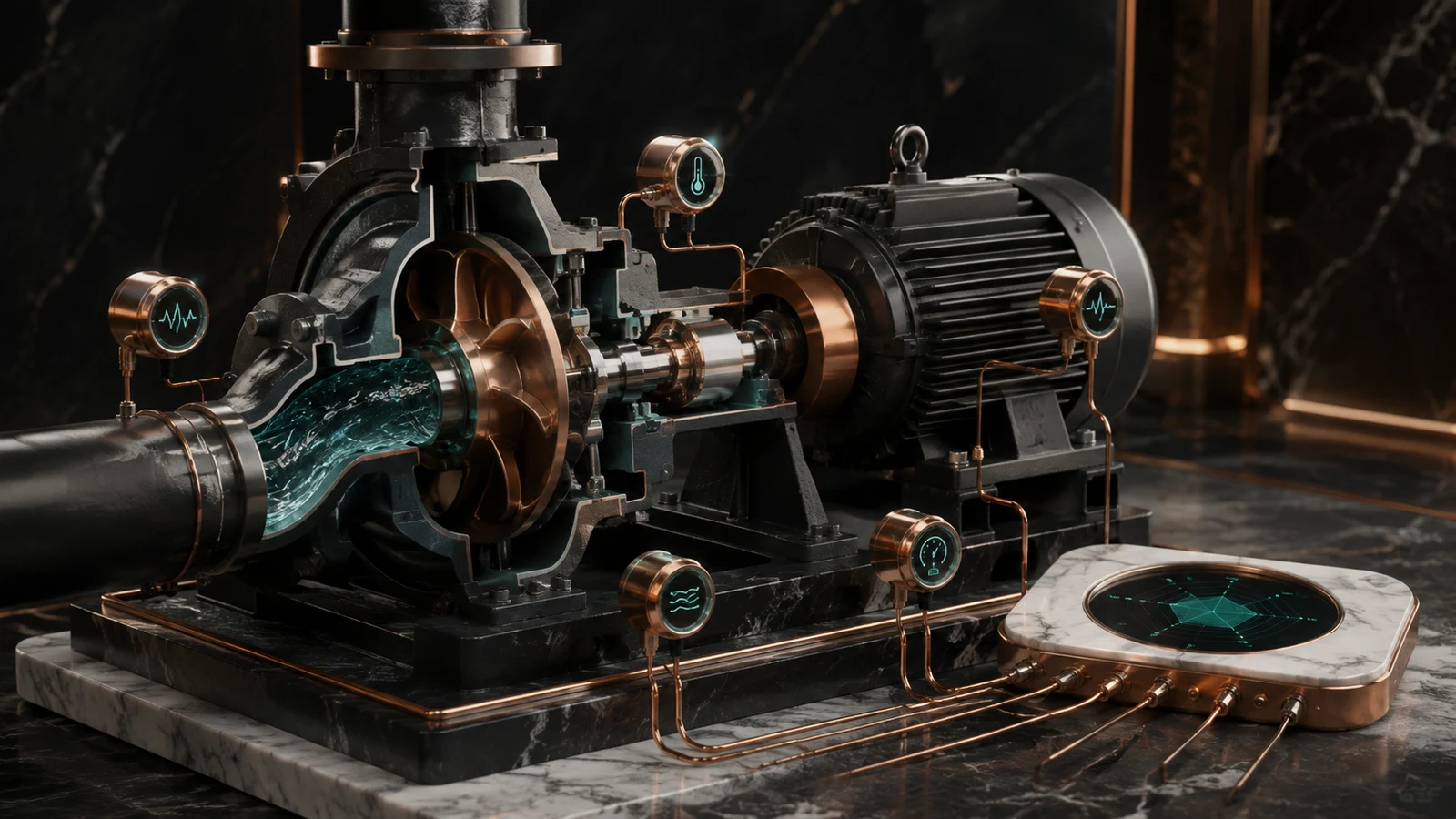
Pump Health Monitoring
Relate vibration, current, flow, pressure, temperature, runtime, and maintenance history to the pump’s actual operating state.
Explore →
Predictive HVAC and Refrigeration Maintenance
Combine equipment state, thermal performance, energy, alarms, service history, and environmental load to identify deterioration before comfort, product, or process is affected.
Explore →
Automated Maintenance Escalation
Turn validated, persistent equipment-condition evidence into a traceable maintenance request without allowing an alert to authorize unsafe action.
Explore →System area
Production & Operations
Production Bottleneck Detection
Connect machine state, queues, changeovers, labor, materials, quality, and schedules to locate the constraint that actually limits useful output.
Explore →
Energy-Aware Operations
Relate electrical demand and other utilities to products, operating states, schedules, environmental load, and useful output.
Explore →
Digital Batch History
Create a lightweight digital thread connecting materials, equipment, settings, people, inspections, exceptions, and outcomes.
Explore →
Machine Utilization Analysis
Replace a single utilization percentage with an accountable view of run, setup, idle, blocked, starved, faulted, and maintenance time.
Explore →System area
Industrial Automation

Industrial Vision Inspection
Use controlled image acquisition and traceable inspection rules to support repeatable quality decisions without hiding uncertainty.
Explore →System area
Sensors, IoT & Telemetry
Make physical conditions measurable, trustworthy, and historically useful before deciding what to automate or optimize.
Remote Asset Monitoring
Preserve useful operating evidence from geographically distributed equipment despite intermittent power, bandwidth, and connectivity.
Explore →
Modernizing Existing Equipment Without Replacing It
Add qualified measurement, history, and integration around mechanically useful equipment while leaving original machine authority intact.
Explore →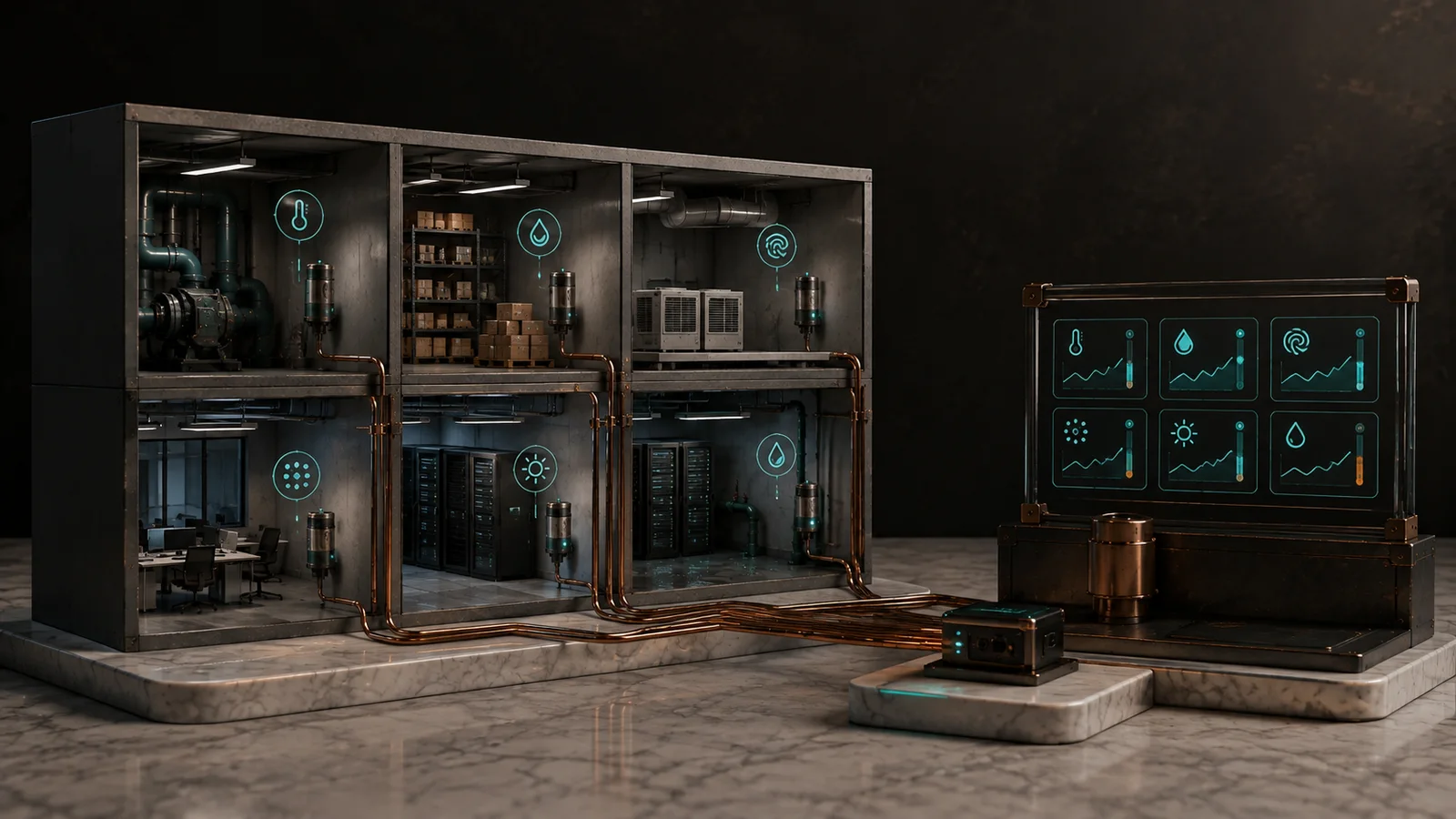
Environmental & Facility Condition Intelligence
Connect environmental measurements across facility zones so changing conditions, recurring excursions, and response priorities become visible.
Explore →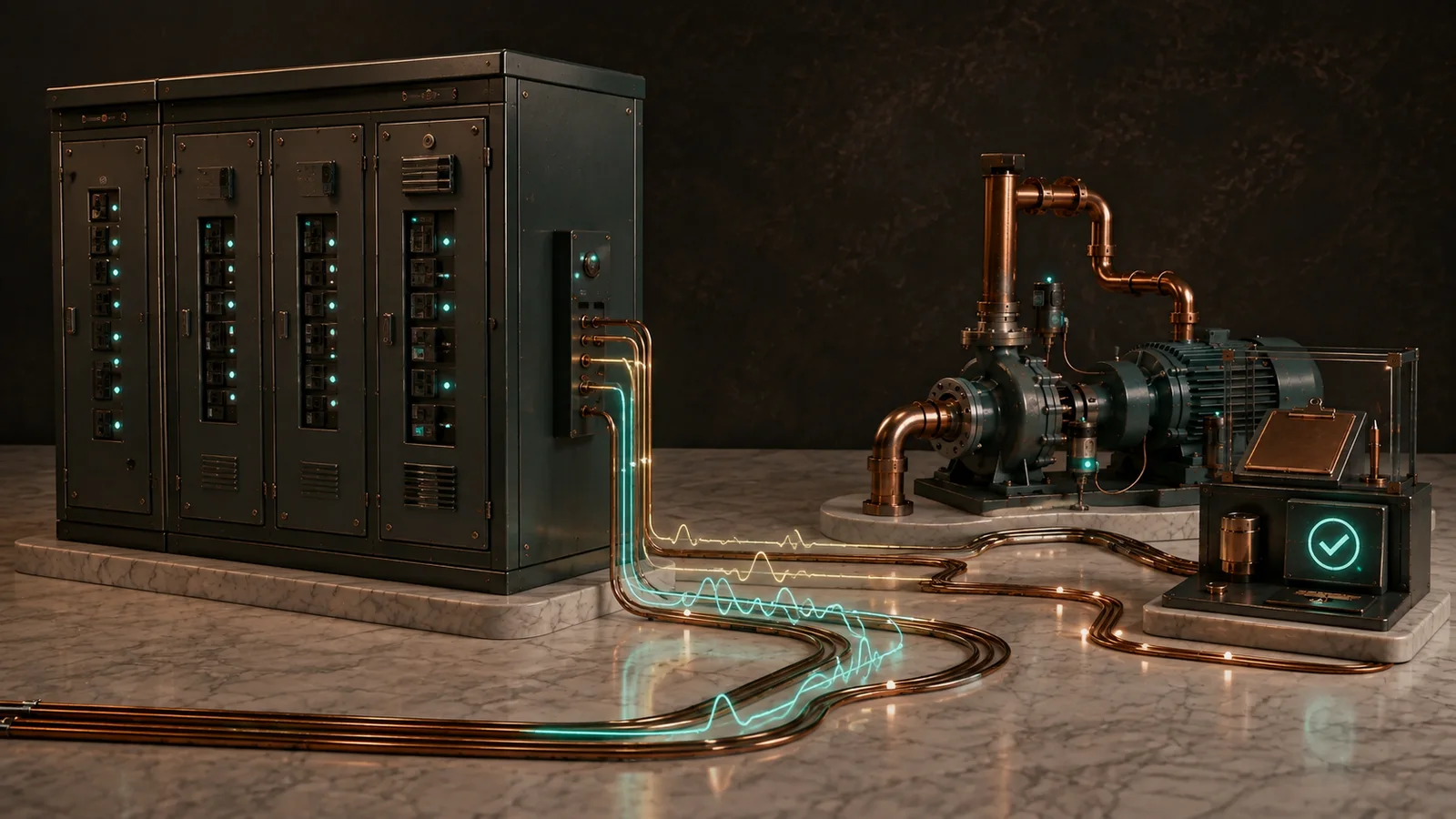
Electrical Load & Power Quality Intelligence
Connect appropriate electrical metering to equipment and production context so load patterns, demand, and changing electrical behavior can be investigated.
Explore →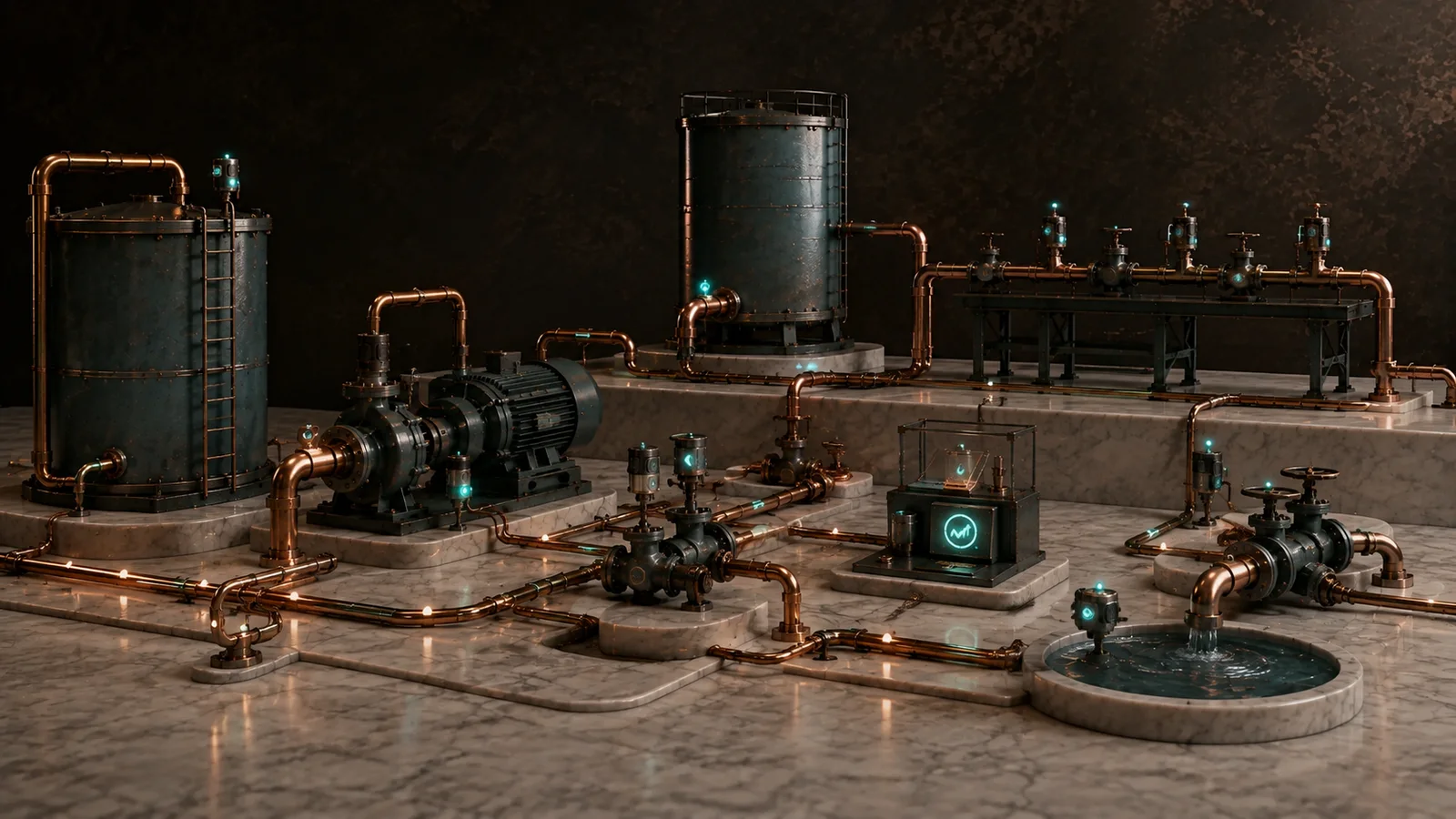
Water, Fluid & Utility Network Telemetry
Connect flow, pressure, level, temperature, and equipment state across a physical network to understand consumption, balance, and abnormal behavior.
Explore →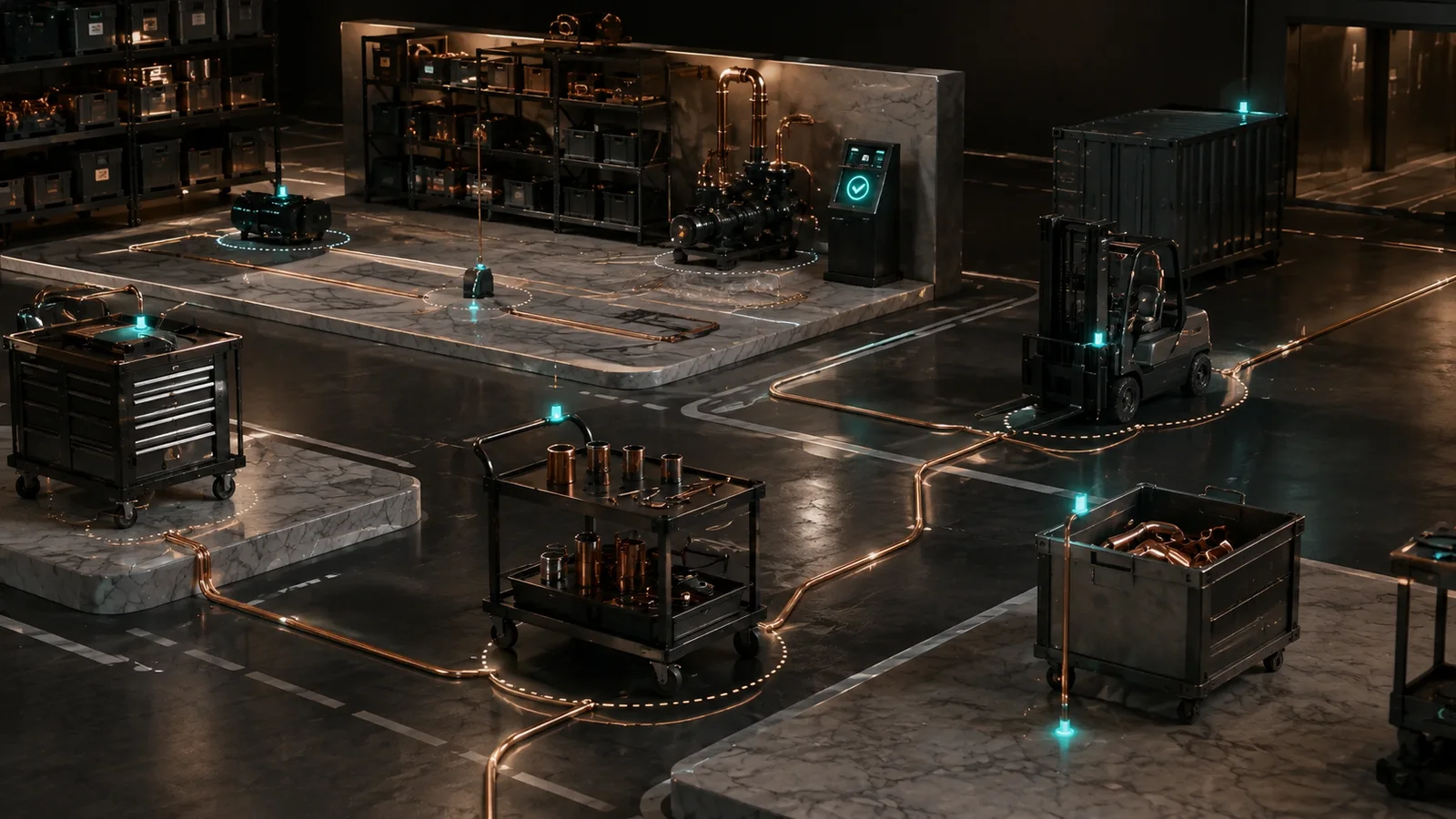
Asset Location & Utilization Intelligence
Combine identification, location, movement, and operating-state events to understand where important assets are and how productively they are used.
Explore →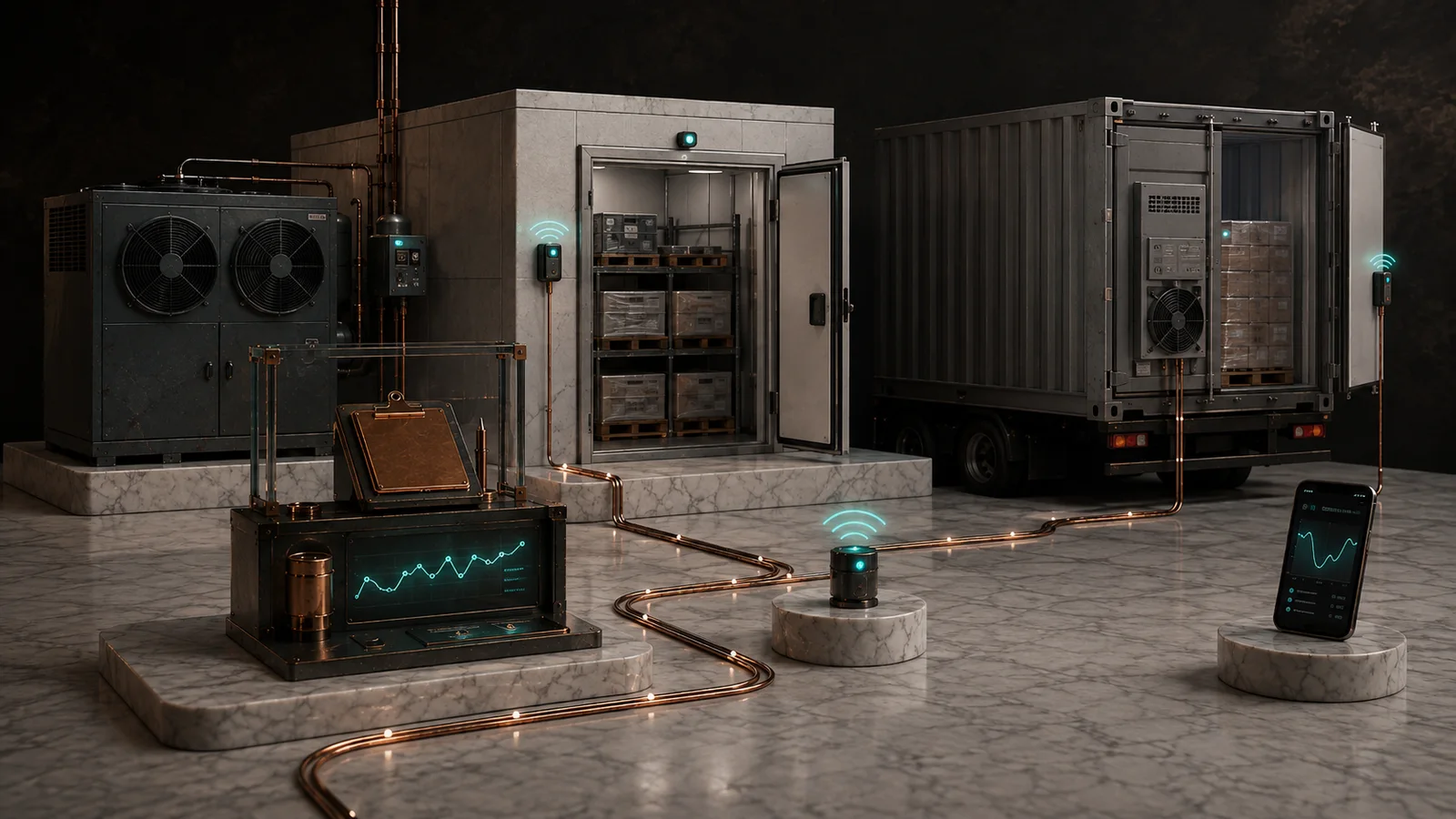
Cold-Chain & Temperature-Sensitive Operations
Preserve a continuous condition record across storage, handling, movement, and equipment operation so excursions can be detected and traced.
Explore →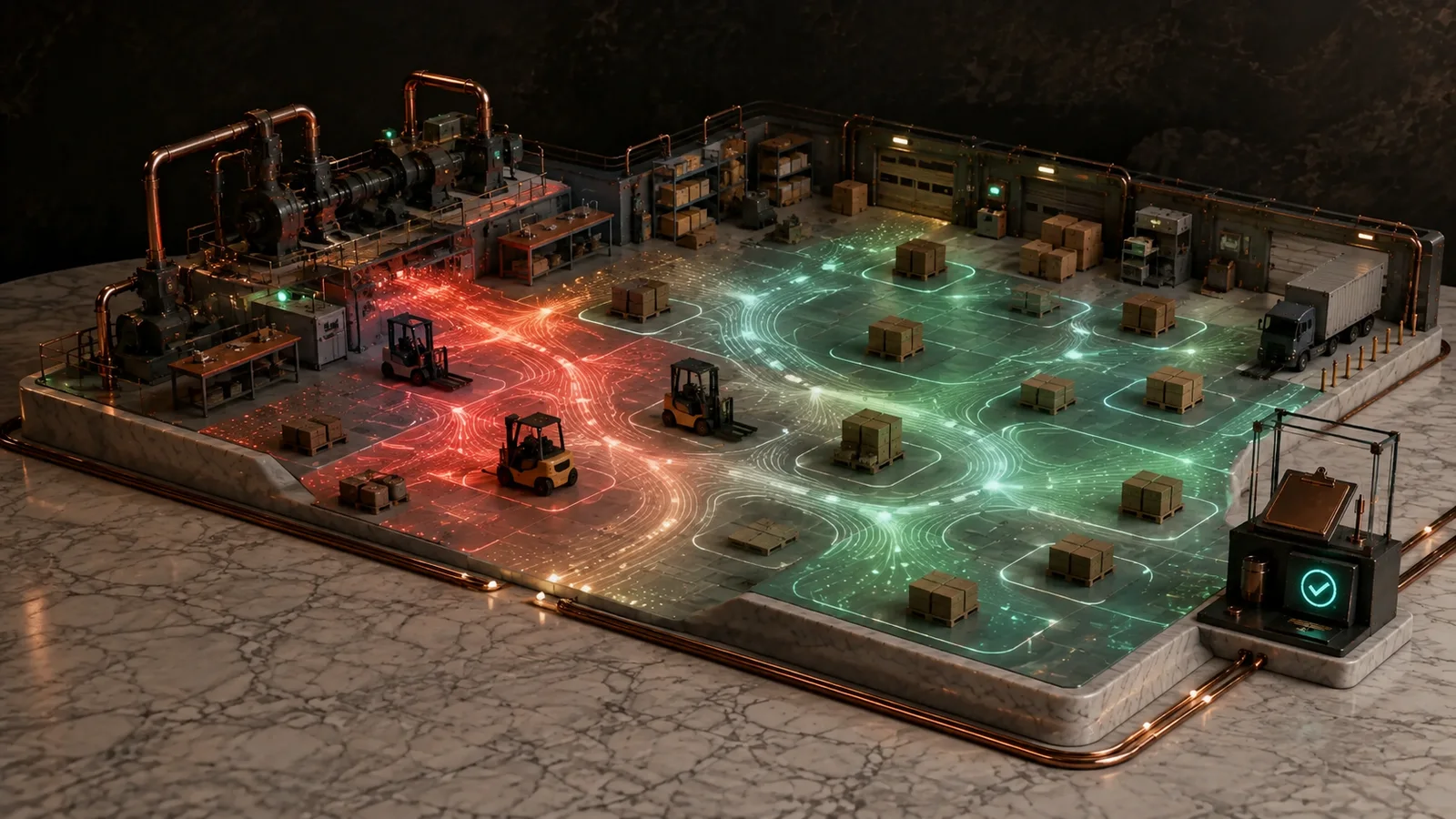
Occupancy, Movement & Space Utilization Intelligence
Use privacy-conscious sensing and operational events to understand how work areas, staging zones, and shared resources are actually used.
Explore →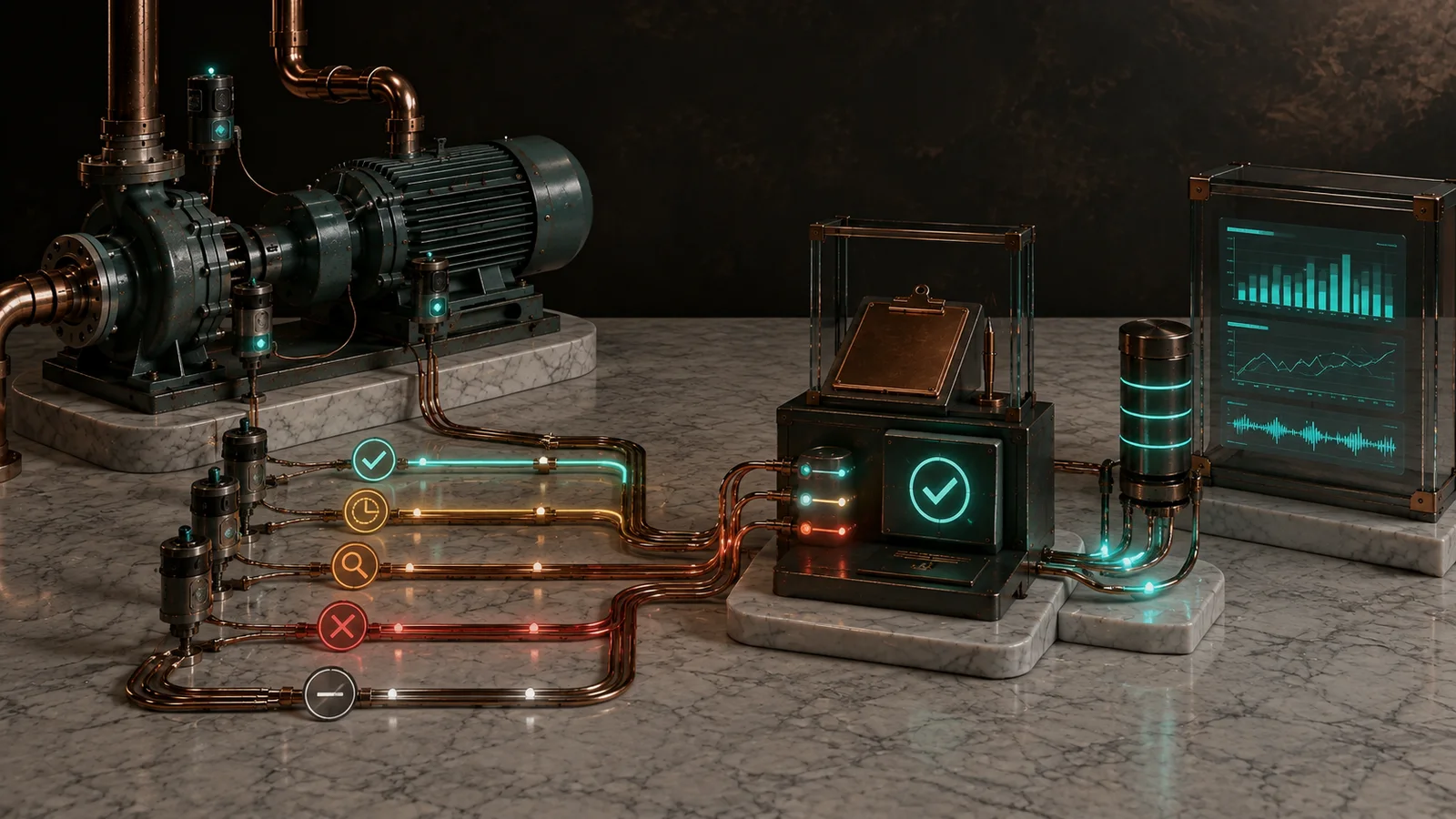
Sensor Trust & Telemetry Integrity
Qualify measurement identity, freshness, plausibility, completeness, and health before telemetry supports an alert, model, dashboard, or decision.
Explore →System area
Controlled Industrial Intelligence
Use rules, analytics, machine learning, simulation, optimization, and bounded assistants where they improve a defined operating decision.
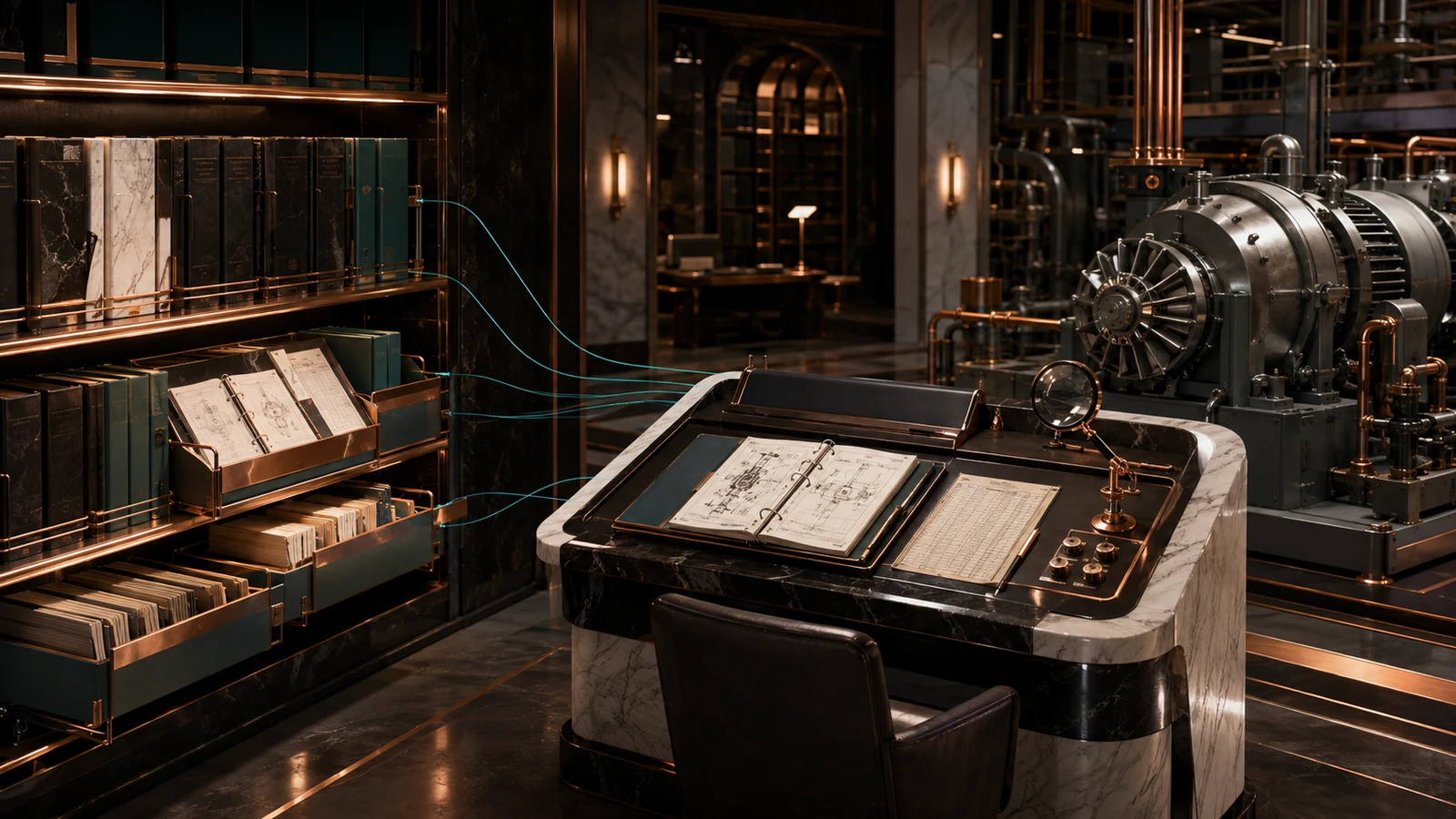
Approved Document Search Assistant
Help authorized personnel find, compare, and cite the correct approved manual, procedure, or maintenance record for a specific asset and revision.
Explore →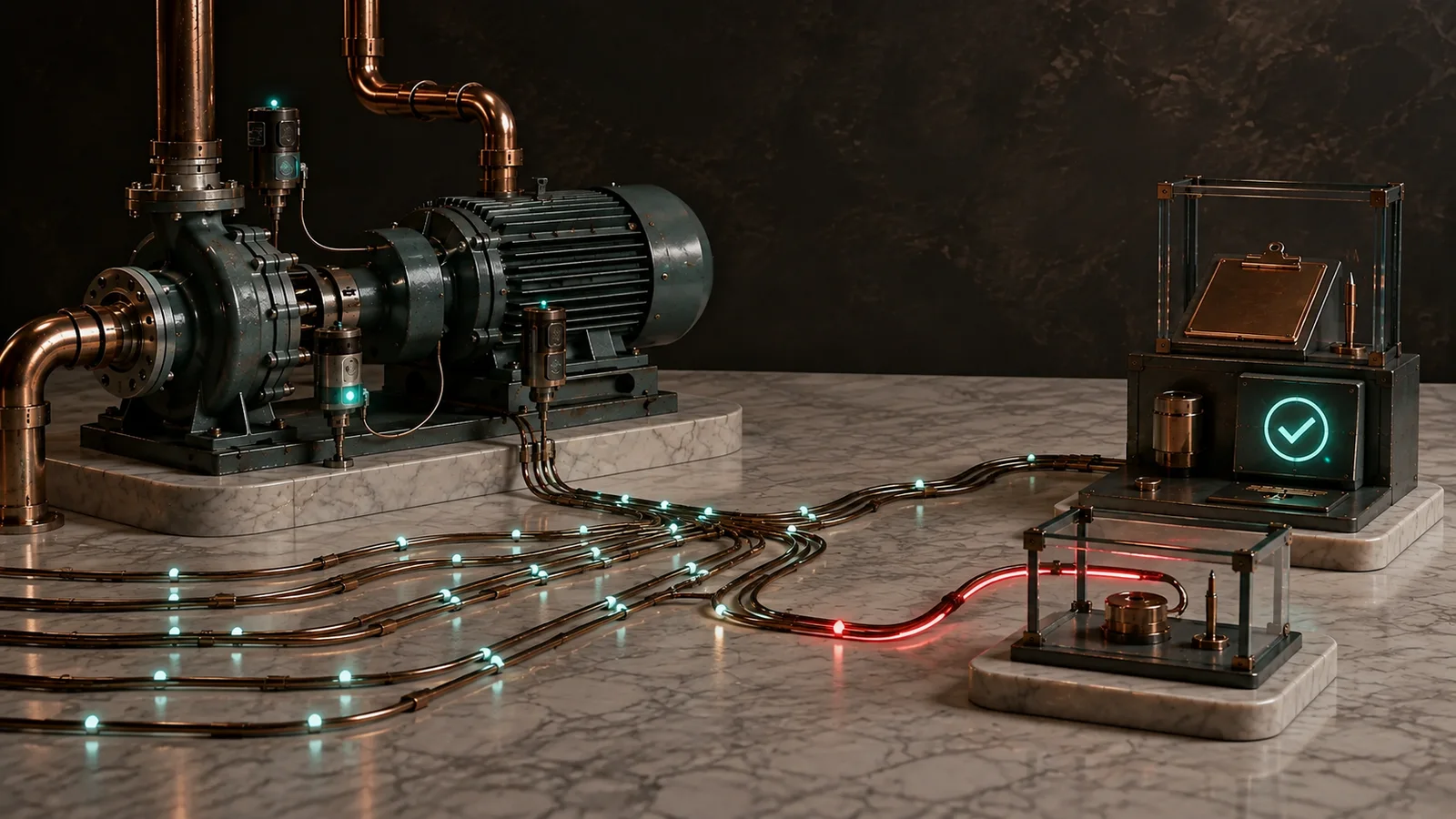
Process Anomaly & Deviation Intelligence
Recognize when multivariable operation departs from comparable normal behavior and present the evidence needed for focused investigation.
Explore →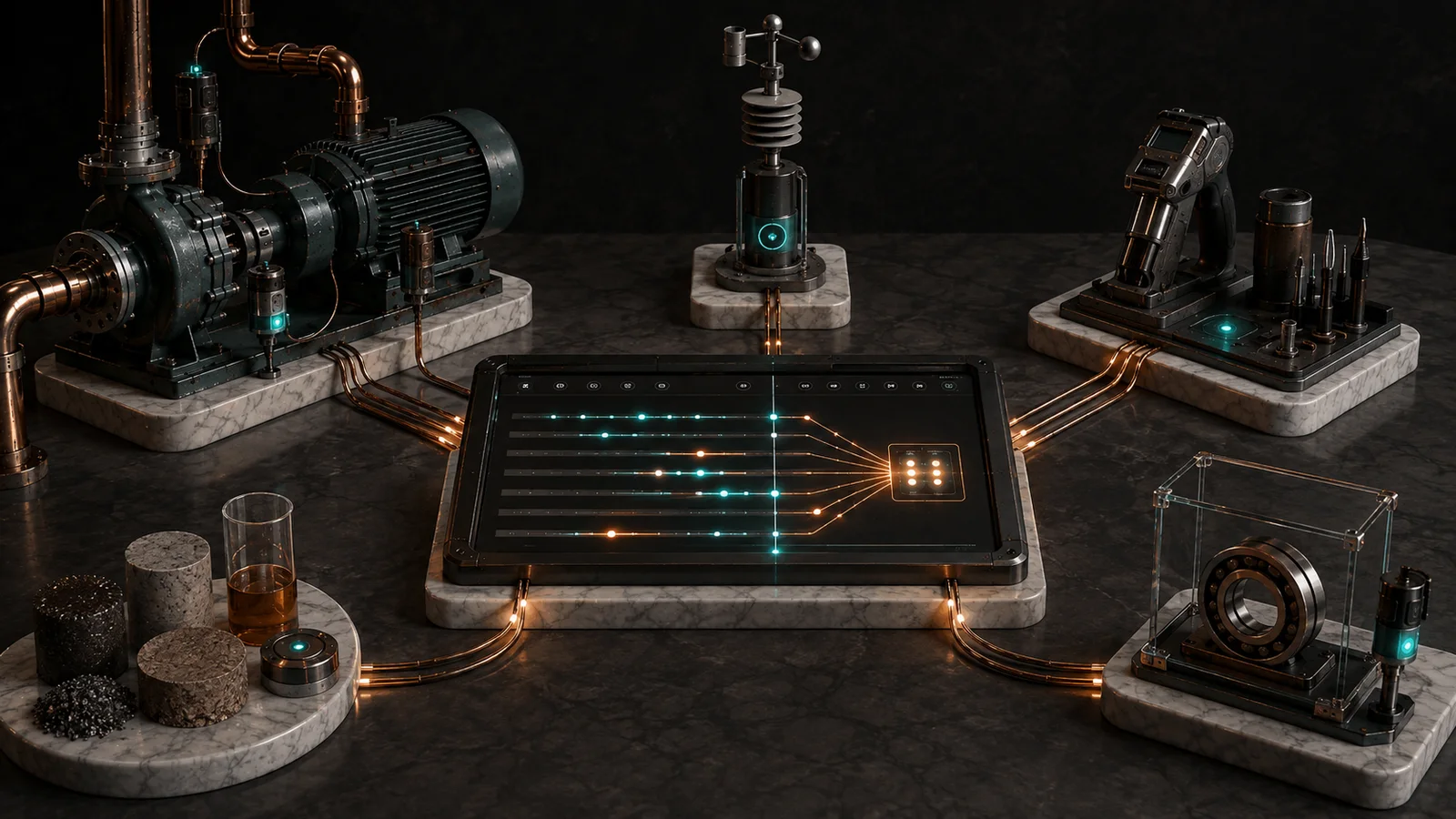
Root-Cause & Event Correlation Intelligence
Align equipment, process, material, environmental, maintenance, and quality events to narrow the causes worth investigating.
Explore →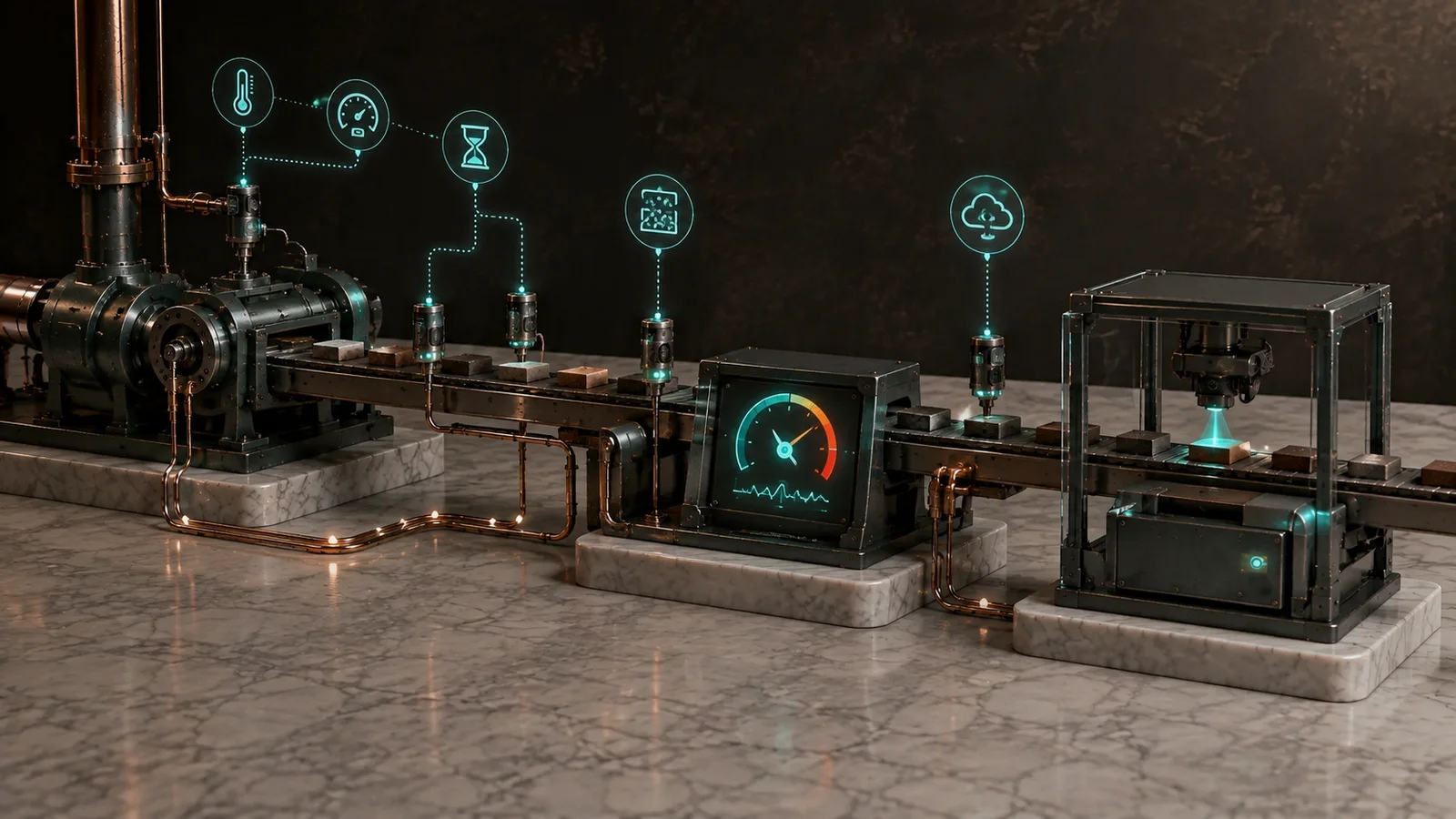
Quality Prediction & Process Drift Intelligence
Connect process history to measured quality outcomes so changing conditions can focus inspection and process review earlier.
Explore →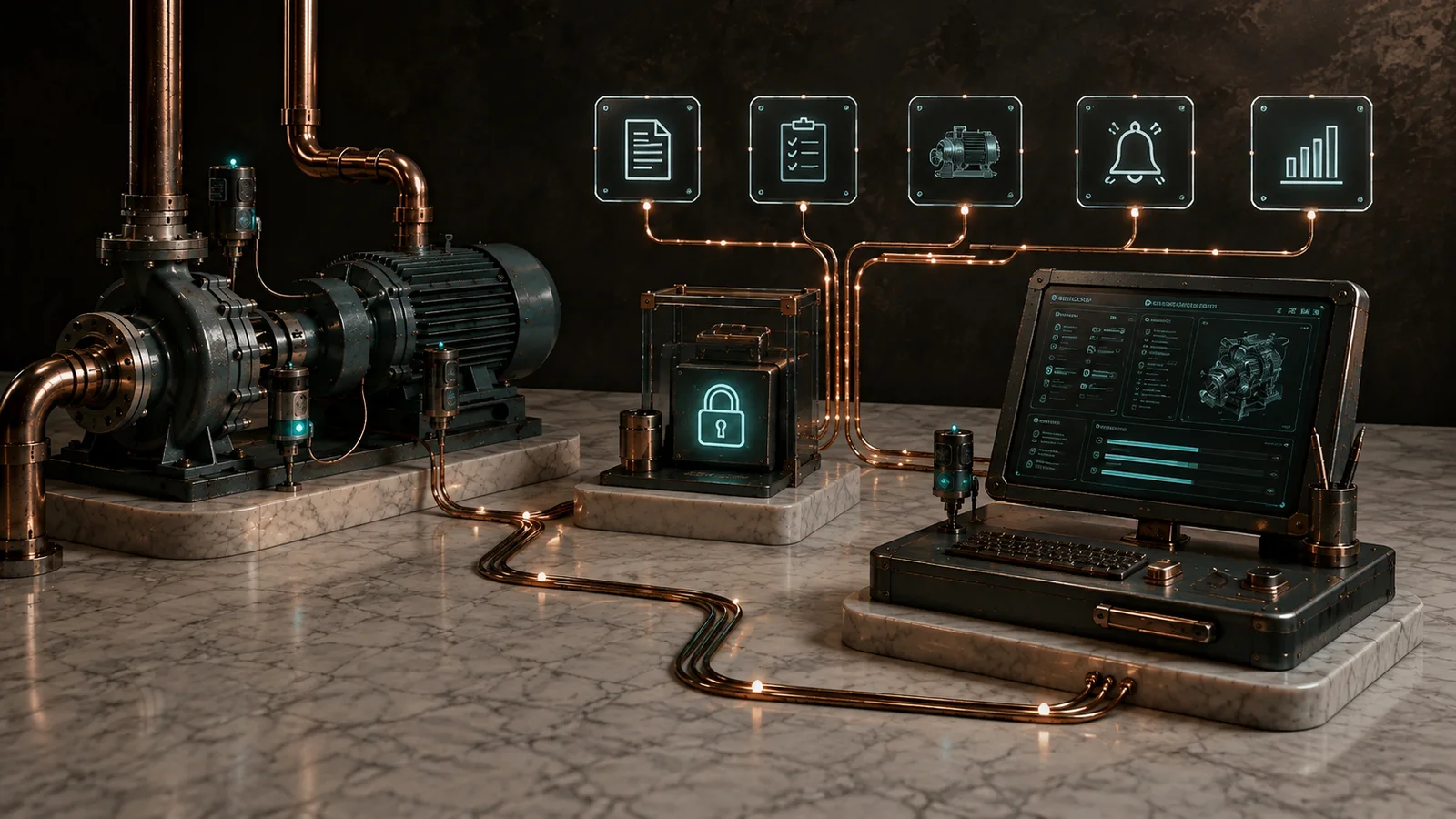
Contextual Operator Knowledge
Combine approved procedures with current operating state and recent history so a shift team can understand an active condition and prepare the right handoff.
Explore →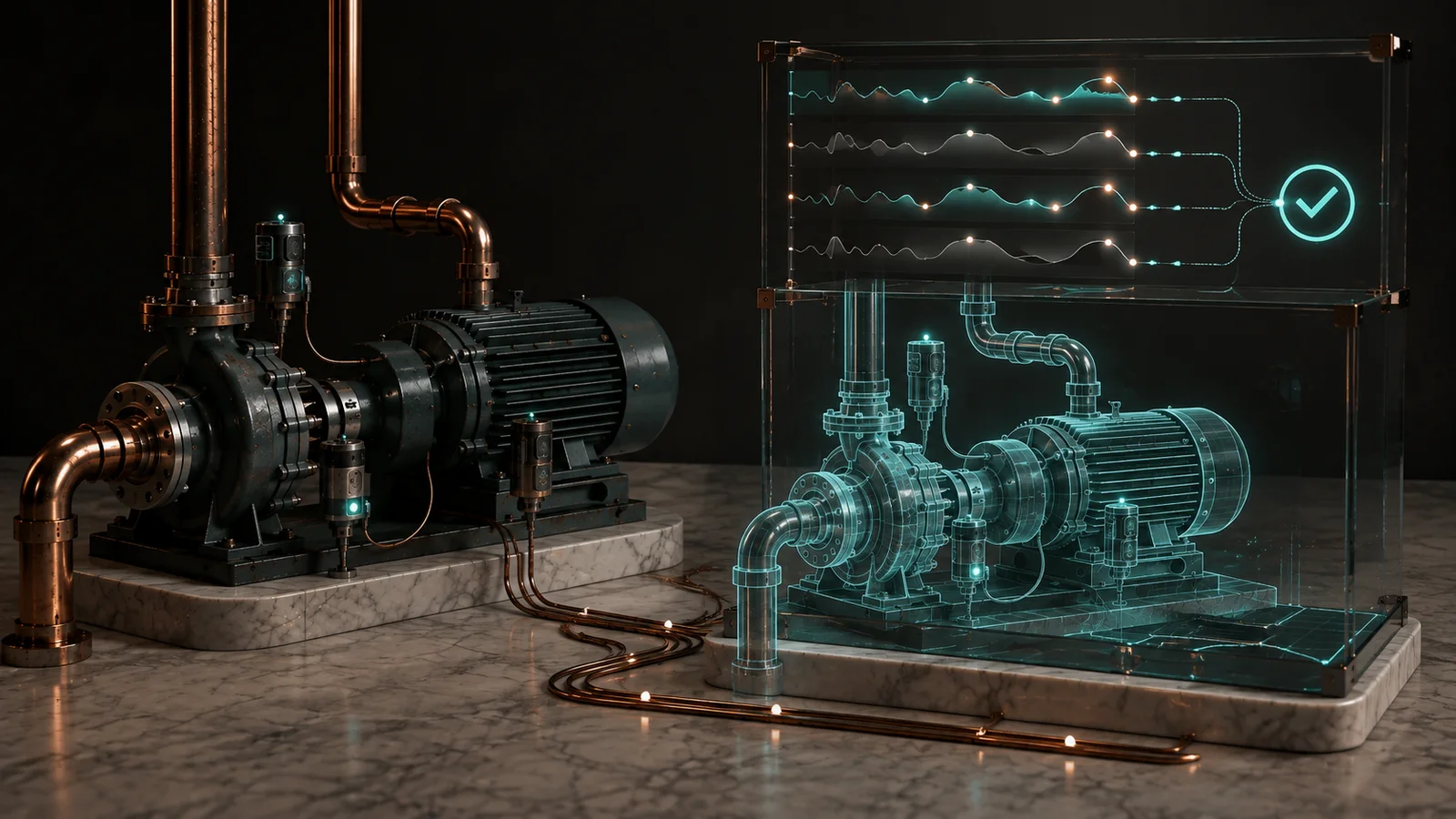
Digital Twin & Scenario Intelligence
Represent important physical states, relationships, capacities, and constraints so proposed operating changes can be compared before implementation.
Explore →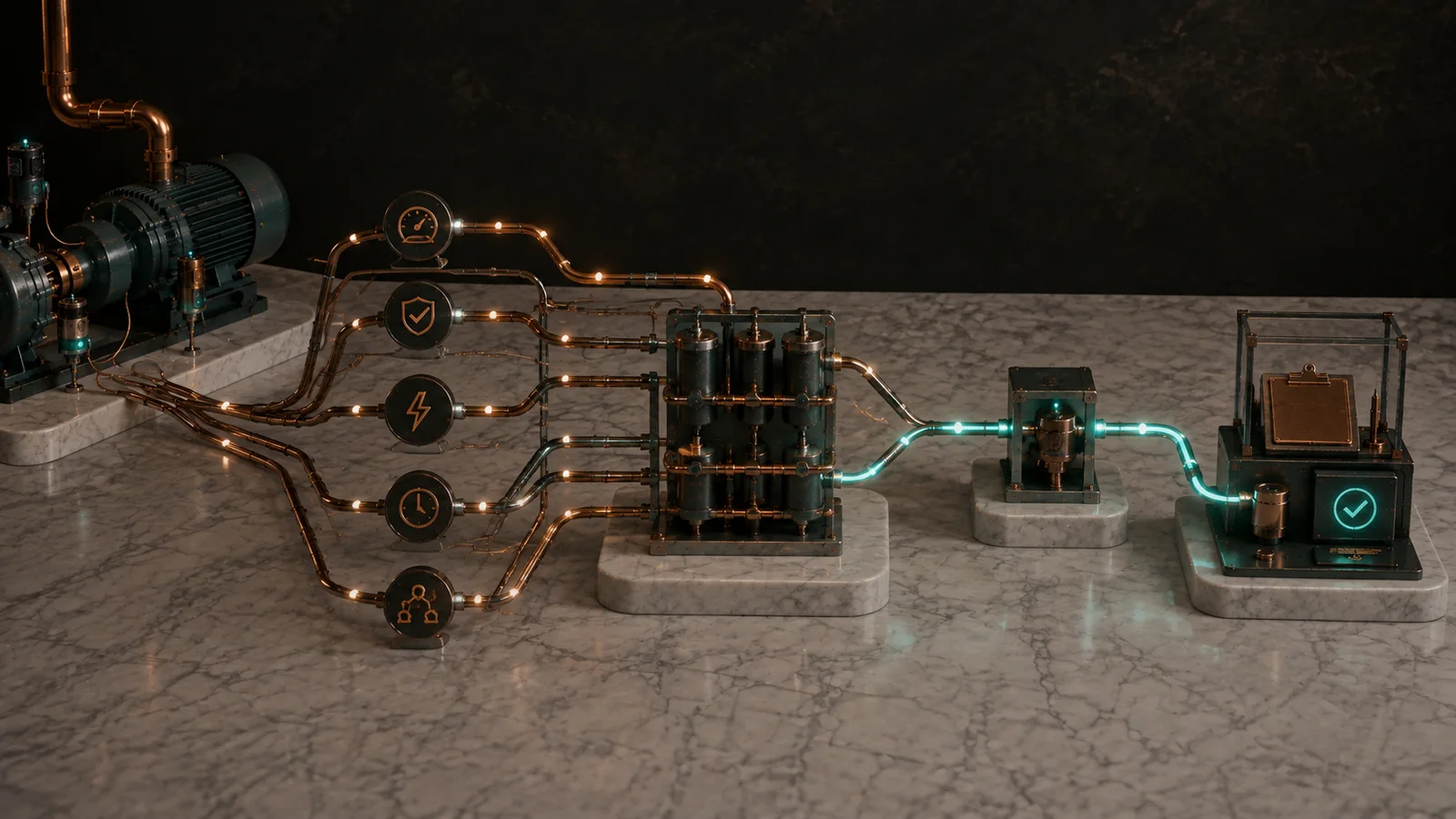
Operational Optimization & Recommended Strategy
Compare feasible operating plans against explicit objectives, constraints, forecasts, and tradeoffs to support a better next decision.
Explore →
Bounded Industrial Agents & Workflow Intelligence
Coordinate approved information and business-system tasks through least-privilege tools, structured actions, current-state checks, and explicit approval points.
Explore →Controlled authority
AI can analyze, detect, explain, and recommend. It should not inherit machine authority by default.
Safety-critical and machine-control functions require appropriate deterministic and interlocked controls, including qualified or safety-rated controls where applicable. Intelligent systems can support the operator without replacing the responsible control architecture.
Review controlled AI authority →Industrial FAQ
Common questions before an assessment begins.
Do we need to replace current equipment?
Not necessarily. Existing equipment may be instrumented or integrated when accessible interfaces, installation conditions, and appropriate authorization permit it.
Do we need AI?
No. The useful design should use the simplest dependable technology that meets the requirement. Many valuable systems need measurement, thresholds, integration, or a clearer workflow, not machine learning.
Can older machines be monitored?
Often. Options can include existing PLC or controller interfaces, external current or vibration sensors, independent environmental measurement, gateways, and camera-based inspection.
Does everything have to go to the cloud?
No. Measurement, buffering, rules, and control may belong locally or at the edge. Cloud services are used only where their availability, latency, security, and operating tradeoffs are acceptable.
What happens when connectivity fails?
The answer must be designed deliberately. Critical local behavior should not silently depend on continuous connectivity, and delayed data should remain distinguishable from current data.
How much data is needed for predictive maintenance?
It depends on the asset, failure mode, operating variation, sensor quality, intervention opportunity, and available examples. Some assets will not have enough evidence to justify a predictive model.
Can existing PLCs and operating systems be integrated?
Where interfaces are supported and access is authorized, existing controllers and systems can often be connected without transferring machine-safety authority to the integration layer.
Plain-language guide
What the technical terms mean in daily work.
Telemetry
Measurements sent from equipment or a site so the condition can be seen and recorded.
Edge system
A local computer or controller that keeps essential processing close to the equipment.
Control boundary
The point where a system can observe or recommend, and the point where approved logic can act.
Baseline
A dependable picture of normal operation used to recognize meaningful change.
How an engagement starts
Begin with one important operating problem.
There is no requirement to prepare a technical specification. Bring the person who knows the work and a recent example that shows where the process becomes difficult.
Describe the work as it happens today.
We identify the decision, people, records, systems, recurring exceptions, and the result the business needs.
Receive a clear current-state picture.
The review identifies what is known, what is missing, the strongest next paths, and the tradeoffs that deserve a decision.
Start with the smallest useful scope.
The work proceeds only after responsibilities, acceptance conditions, access, timing, and the first measurable outcome are clear.