

Engineering Examples
Browse operating problems, evidence, and bounded technical approaches.
These are illustrative engineering examples, not documented customer case studies. Each shows the kind of operating question, evidence chain, system boundary, and measurable outcome that should be understood before implementation.
How to use this library
Start with the condition the operation needs to see or decide.
Open an example to review the operating problem, required evidence, technical layers, automation boundary, failure considerations, maturity path, and business measures. Return here to compare adjacent patterns.
2 examples
AgTech & Controlled Environments
Crop, water, environmental, and controlled-growing evidence connected to practical operating decisions.
Illustrative Engineering Example
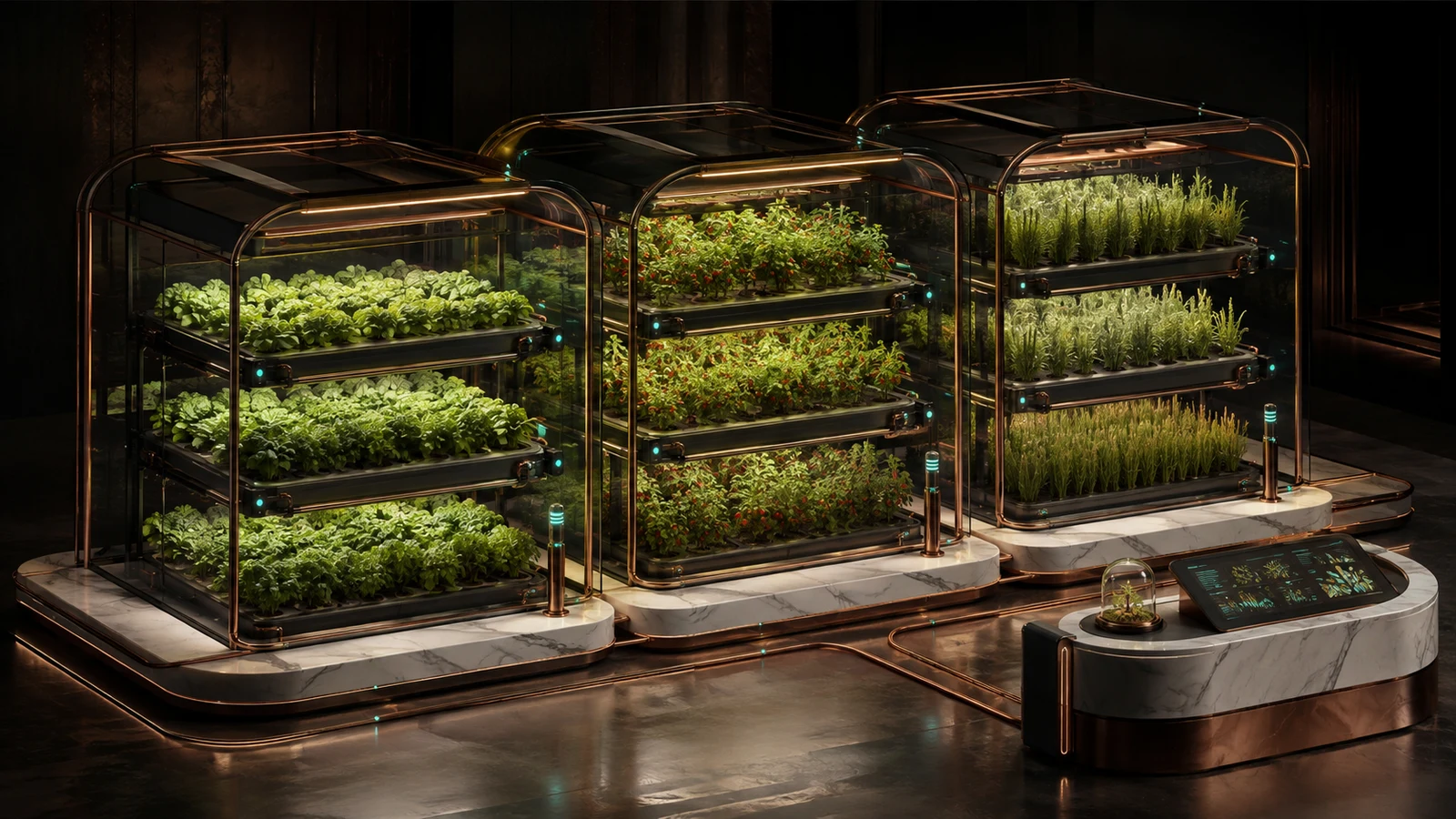
Vertical Farm Environmental Intelligence
Connect crop identity, growing-zone conditions, equipment behavior, interventions, and harvest outcomes so variability can be investigated instead of guessed.
Review the example →
Illustrative Engineering Example
Smart Irrigation and Nutrient Control
Connect root-zone condition, water delivery, nutrient concentration, crop stage, equipment state, and runoff to controlled irrigation decisions.
Review the example →3 examples
Condition Monitoring
Condition signals, operating context, and maintenance evidence used to support qualified review.
Illustrative Engineering Example
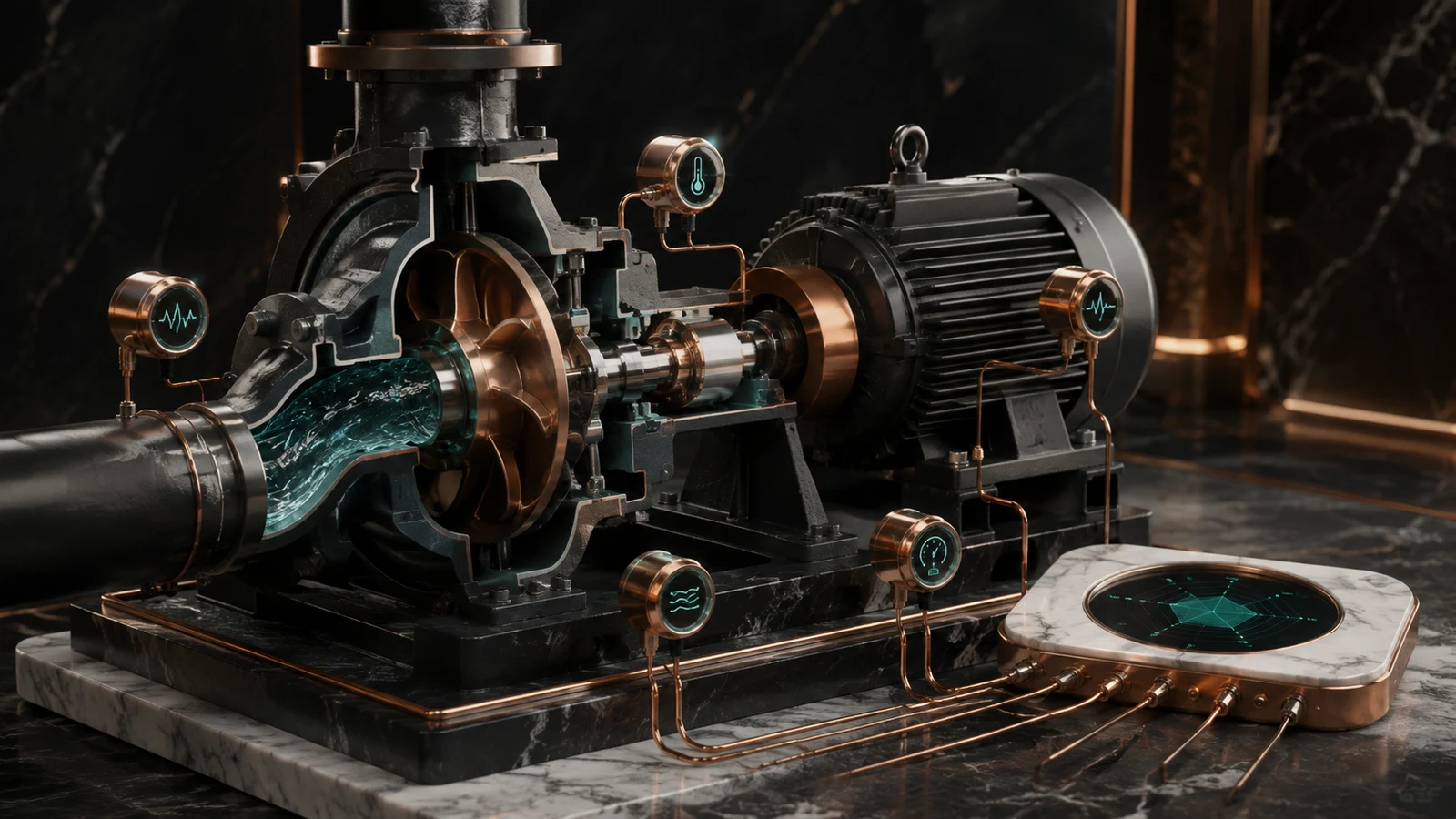
Pump Health Monitoring
Relate vibration, current, flow, pressure, temperature, runtime, and maintenance history to the pump’s actual operating state.
Review the example →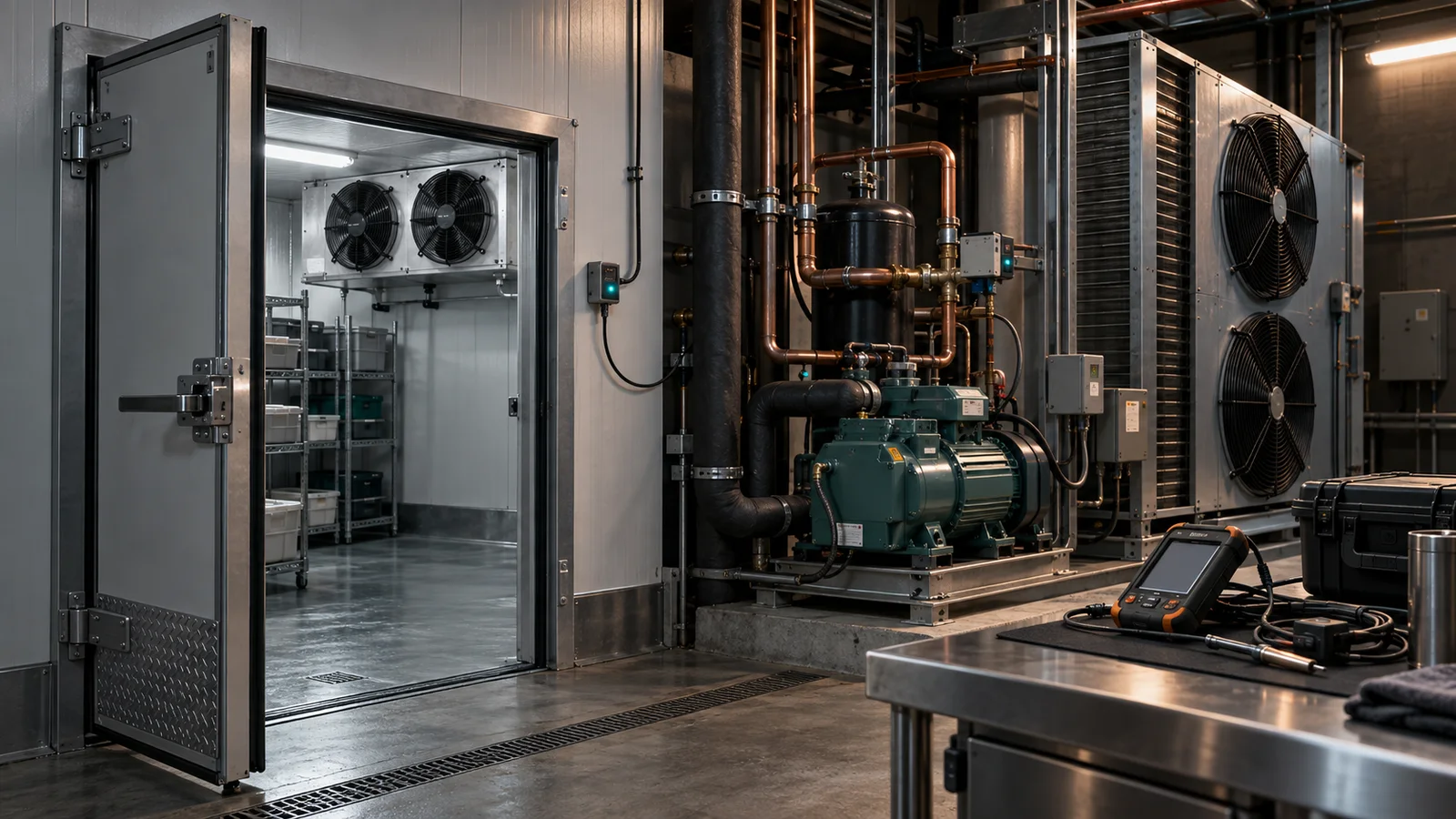
Illustrative Engineering Example
Predictive HVAC and Refrigeration Maintenance
Combine equipment state, thermal performance, energy, alarms, service history, and environmental load to identify deterioration before comfort, product, or process is affected.
Review the example →
Illustrative Engineering Example
Automated Maintenance Escalation
Turn validated, persistent equipment-condition evidence into a traceable maintenance request without allowing an alert to authorize unsafe action.
Review the example →4 examples
Production & Operations
Flow, production, utility, batch, quality, and operating context connected to useful output.
Illustrative Engineering Example
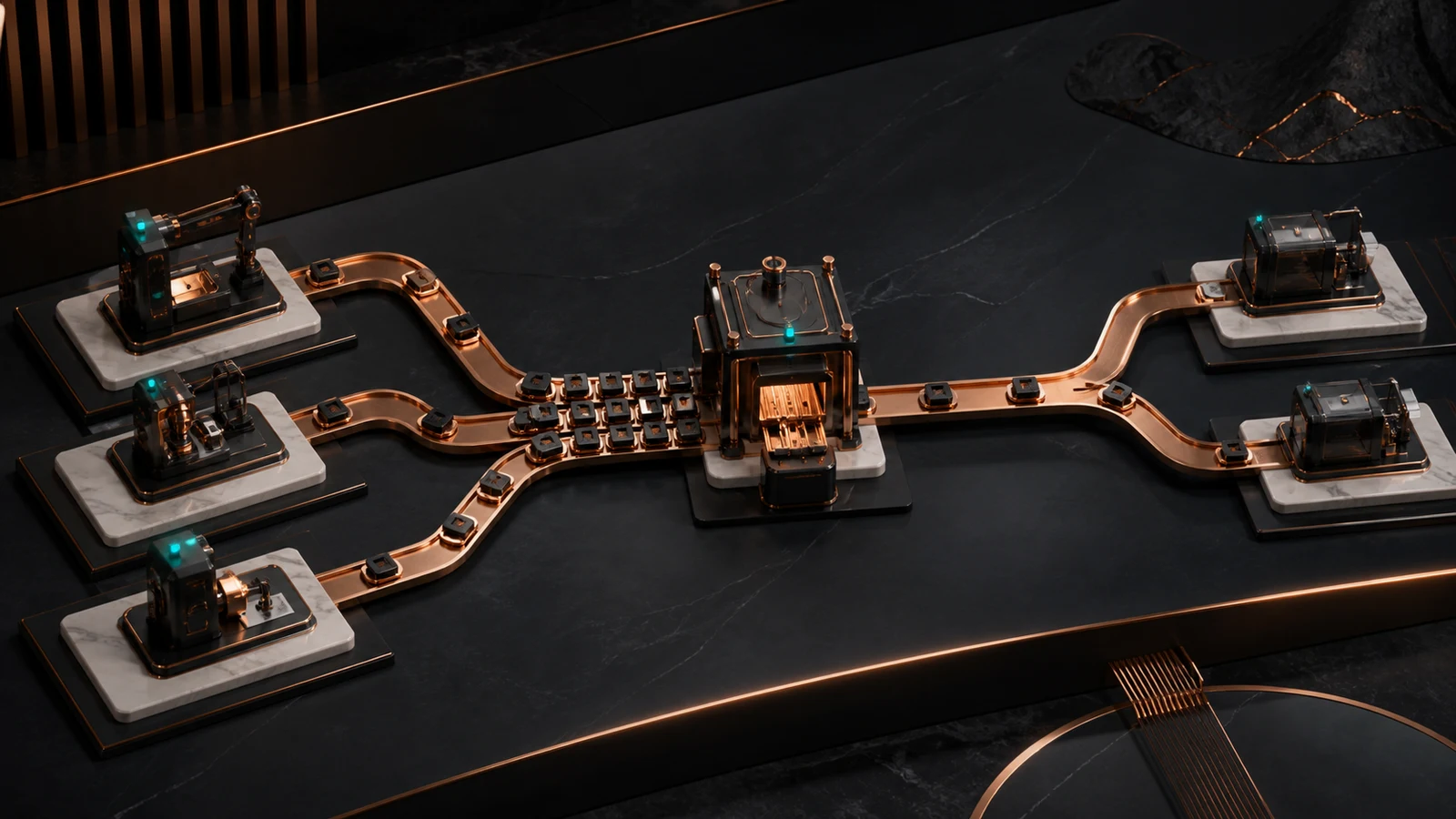
Production Bottleneck Detection
Connect machine state, queues, changeovers, labor, materials, quality, and schedules to locate the constraint that actually limits useful output.
Review the example →
Illustrative Engineering Example
Energy-Aware Operations
Relate electrical demand and other utilities to products, operating states, schedules, environmental load, and useful output.
Review the example →
Illustrative Engineering Example
Digital Batch History
Create a lightweight digital thread connecting materials, equipment, settings, people, inspections, exceptions, and outcomes.
Review the example →
Illustrative Engineering Example
Machine Utilization Analysis
Replace a single utilization percentage with an accountable view of run, setup, idle, blocked, starved, faulted, and maintenance time.
Review the example →1 example
Industrial Automation
Controlled sensing, inspection, escalation, and automation support without hiding uncertainty.

Illustrative Engineering Example
Industrial Vision Inspection
Use controlled image acquisition and traceable inspection rules to support repeatable quality decisions without hiding uncertainty.
Review the example →9 examples
Sensors, IoT & Telemetry
Reliable measurement, edge behavior, connectivity, and historical evidence from distributed operations.
Illustrative Engineering Example
Remote Asset Monitoring
Preserve useful operating evidence from geographically distributed equipment despite intermittent power, bandwidth, and connectivity.
Review the example →
Illustrative Engineering Example
Modernizing Existing Equipment Without Replacing It
Add qualified measurement, history, and integration around mechanically useful equipment while leaving original machine authority intact.
Review the example →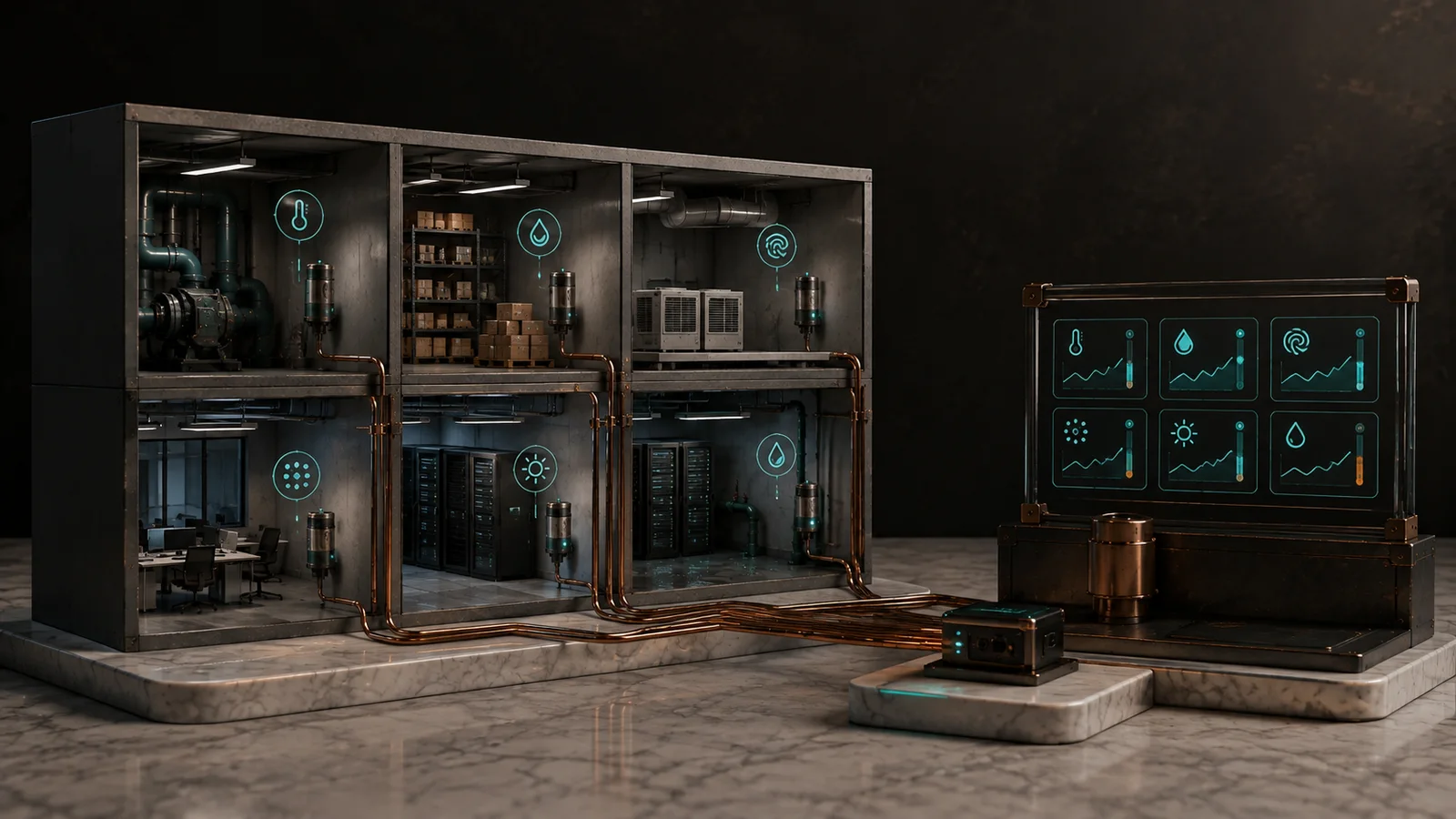
Illustrative Engineering Example
Environmental & Facility Condition Intelligence
Connect environmental measurements across facility zones so changing conditions, recurring excursions, and response priorities become visible.
Review the example →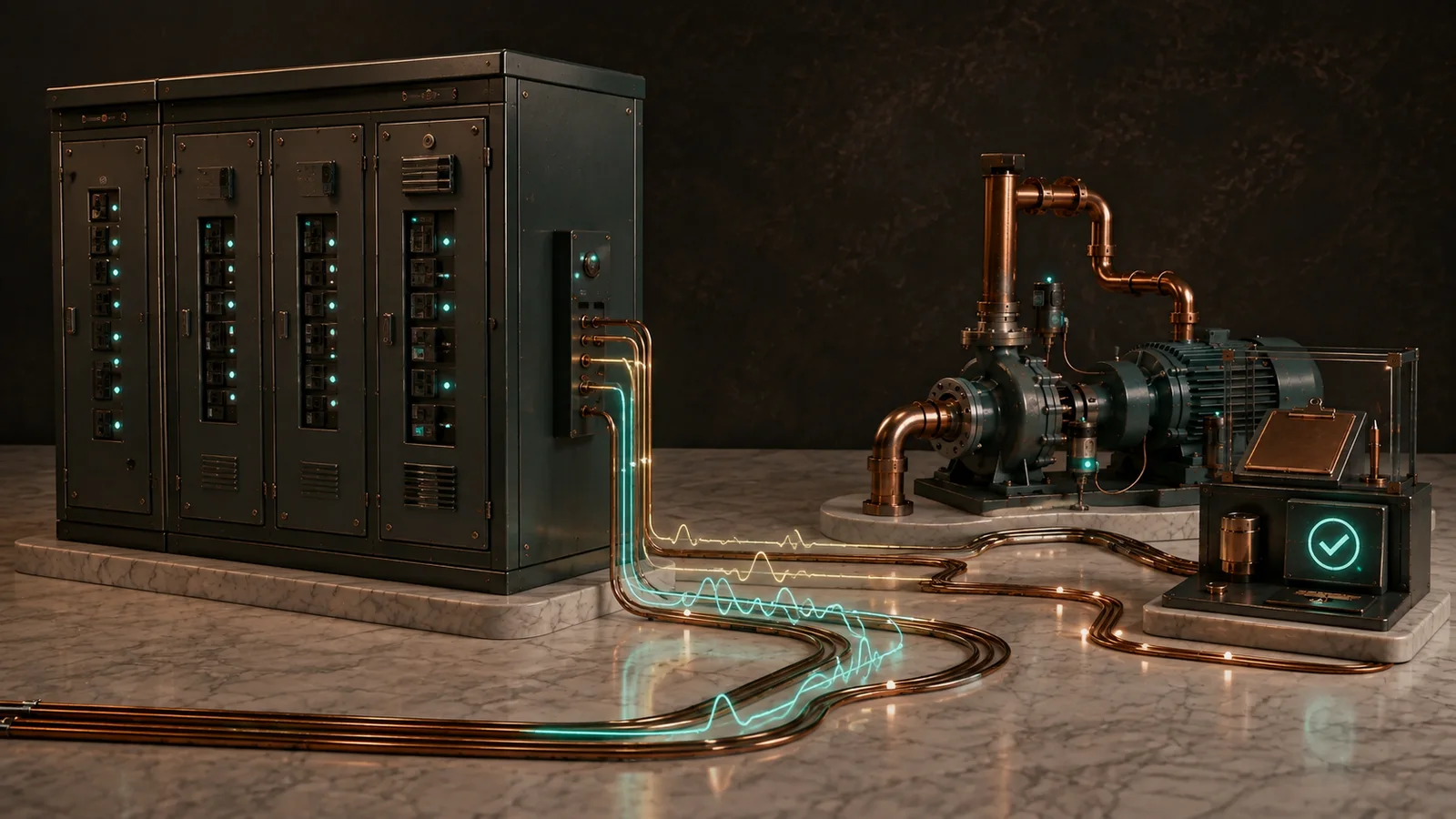
Illustrative Engineering Example
Electrical Load & Power Quality Intelligence
Connect appropriate electrical metering to equipment and production context so load patterns, demand, and changing electrical behavior can be investigated.
Review the example →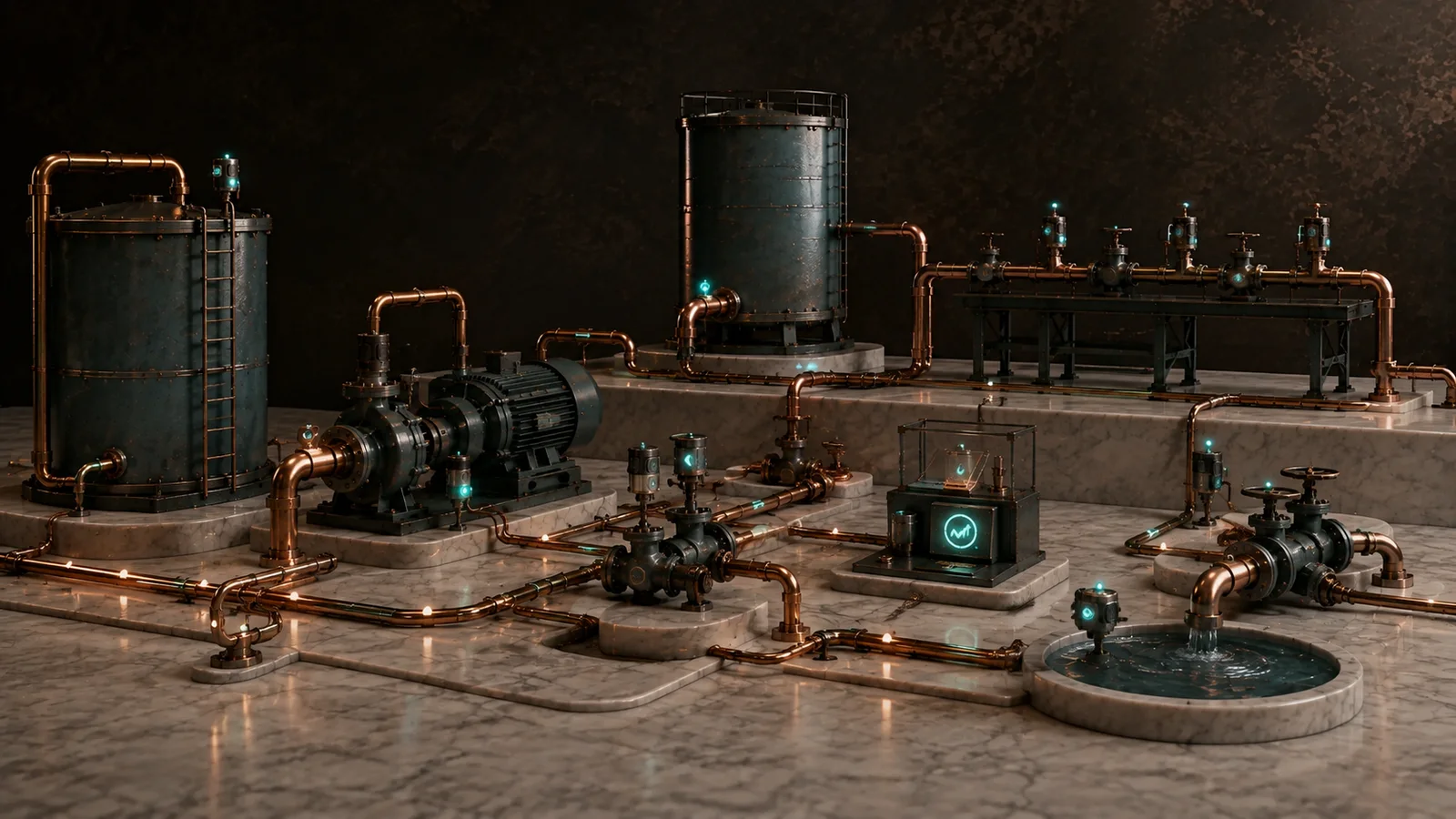
Illustrative Engineering Example
Water, Fluid & Utility Network Telemetry
Connect flow, pressure, level, temperature, and equipment state across a physical network to understand consumption, balance, and abnormal behavior.
Review the example →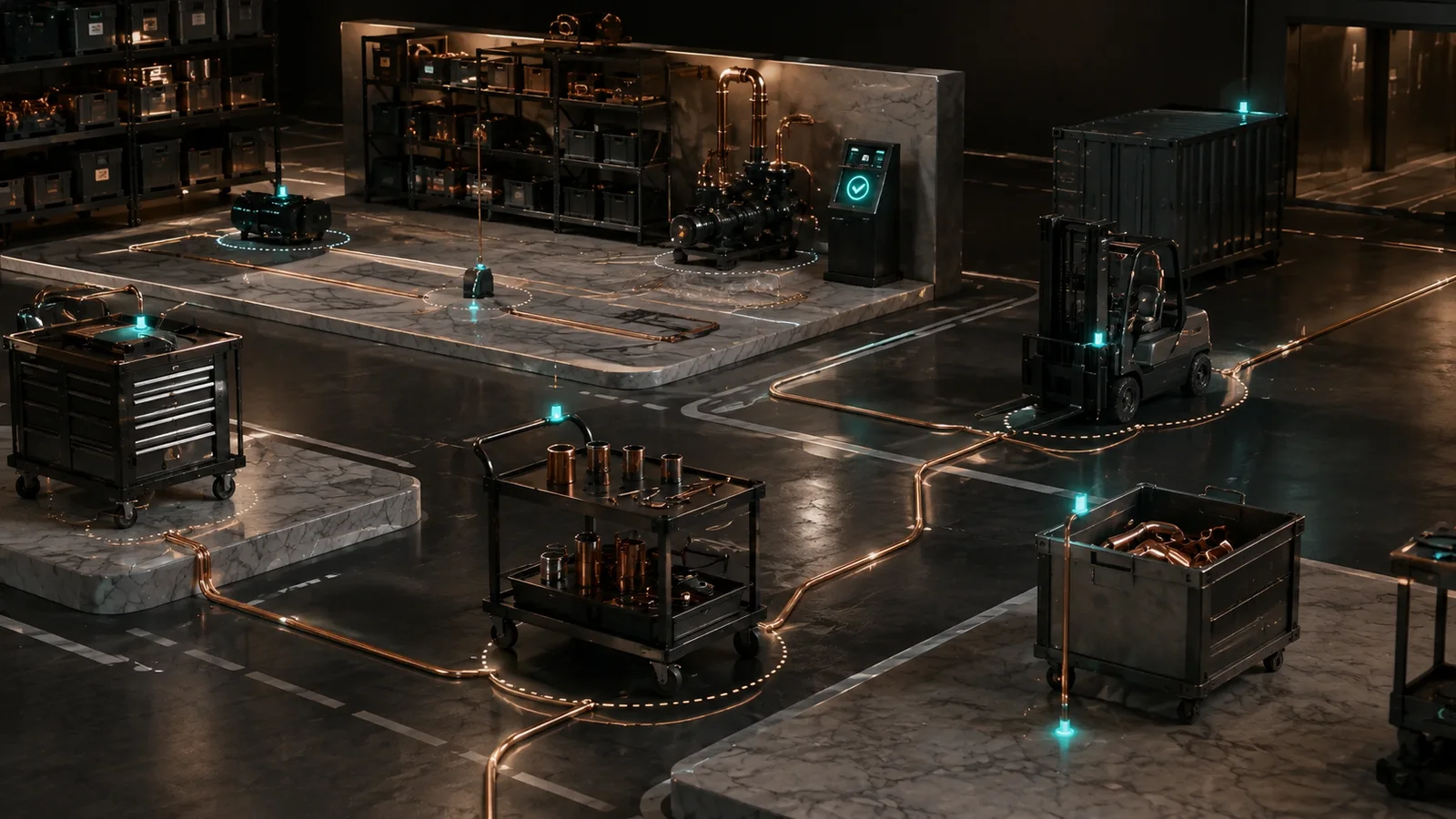
Illustrative Engineering Example
Asset Location & Utilization Intelligence
Combine identification, location, movement, and operating-state events to understand where important assets are and how productively they are used.
Review the example →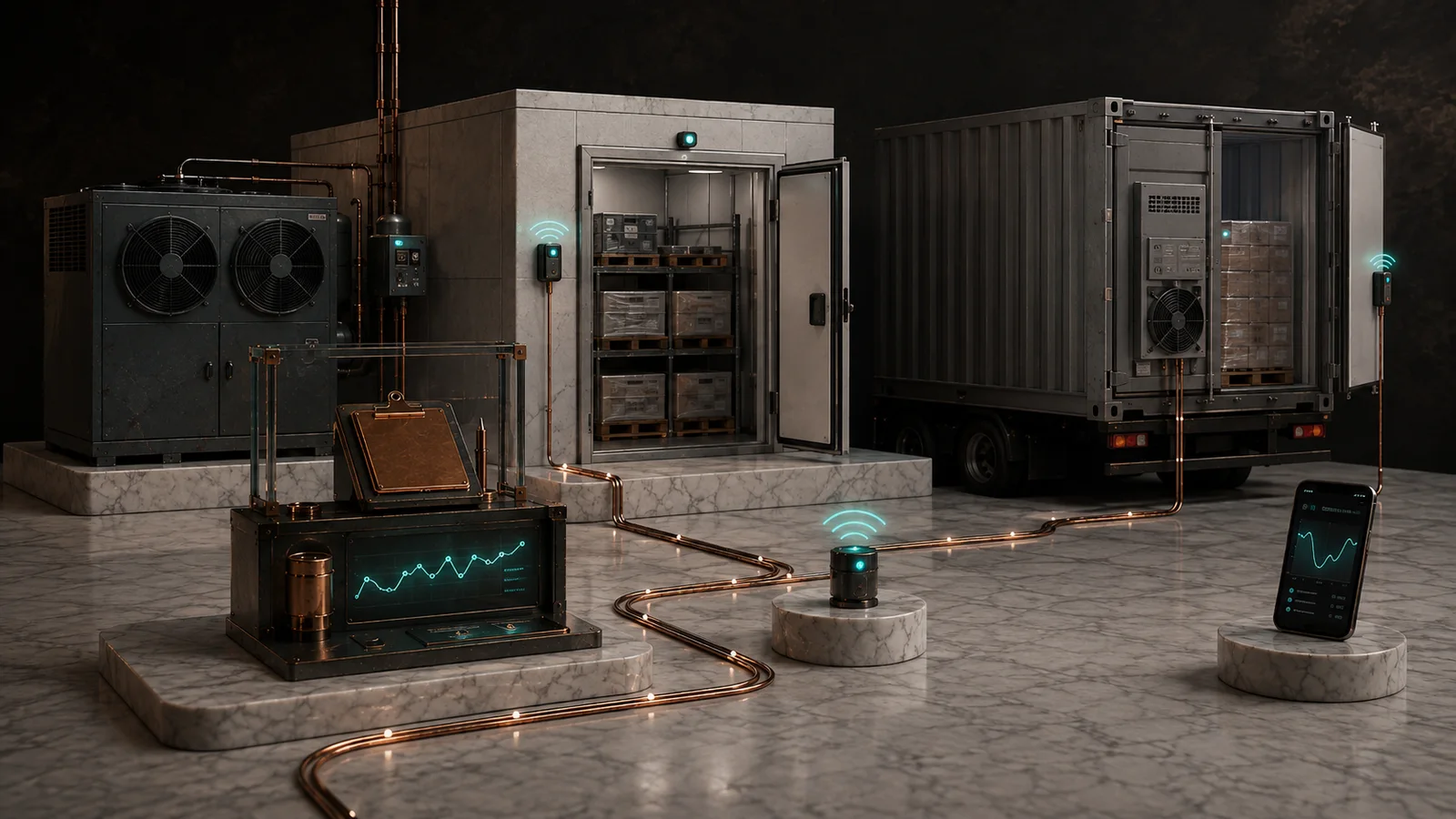
Illustrative Engineering Example
Cold-Chain & Temperature-Sensitive Operations
Preserve a continuous condition record across storage, handling, movement, and equipment operation so excursions can be detected and traced.
Review the example →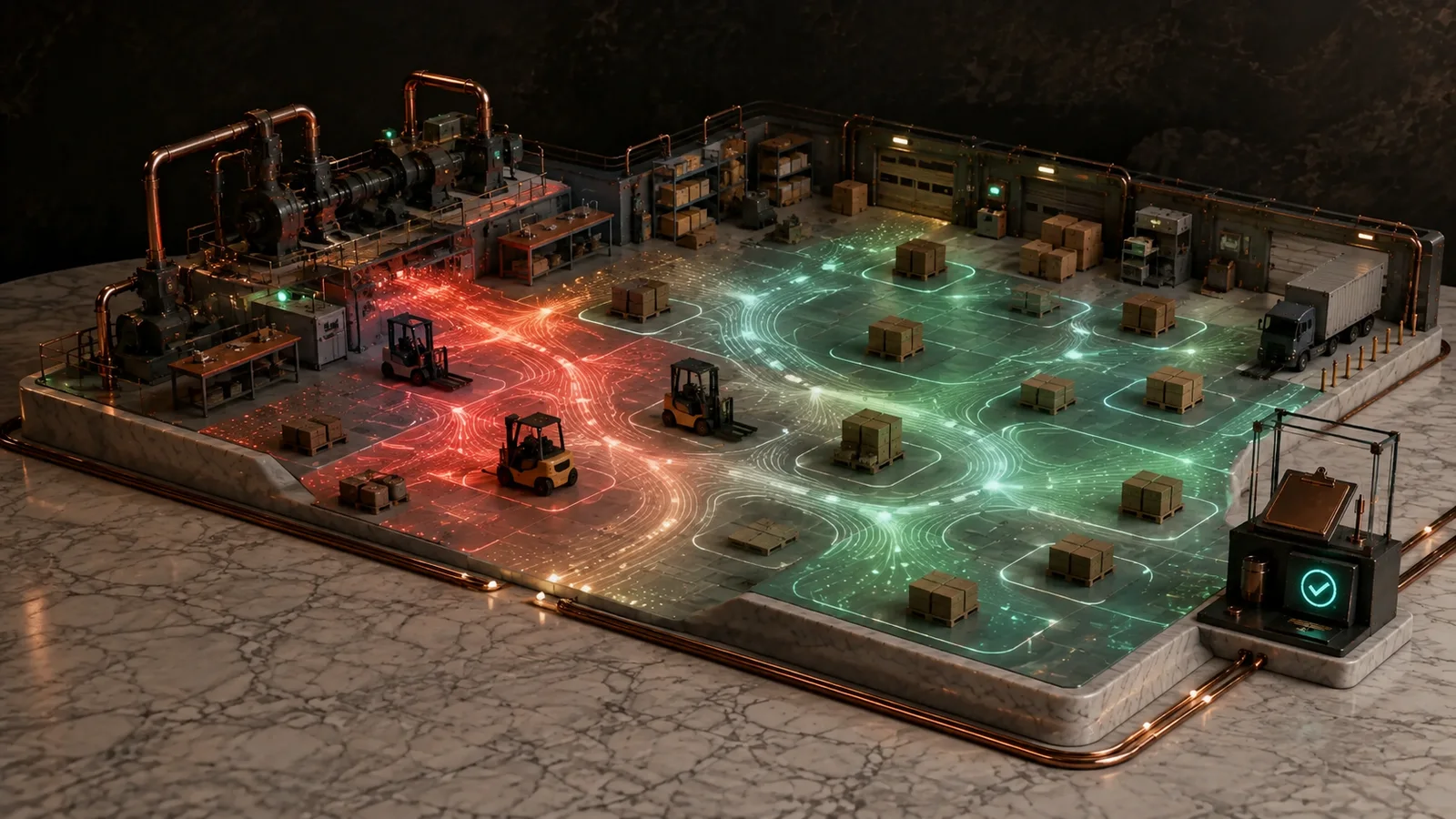
Illustrative Engineering Example
Occupancy, Movement & Space Utilization Intelligence
Use privacy-conscious sensing and operational events to understand how work areas, staging zones, and shared resources are actually used.
Review the example →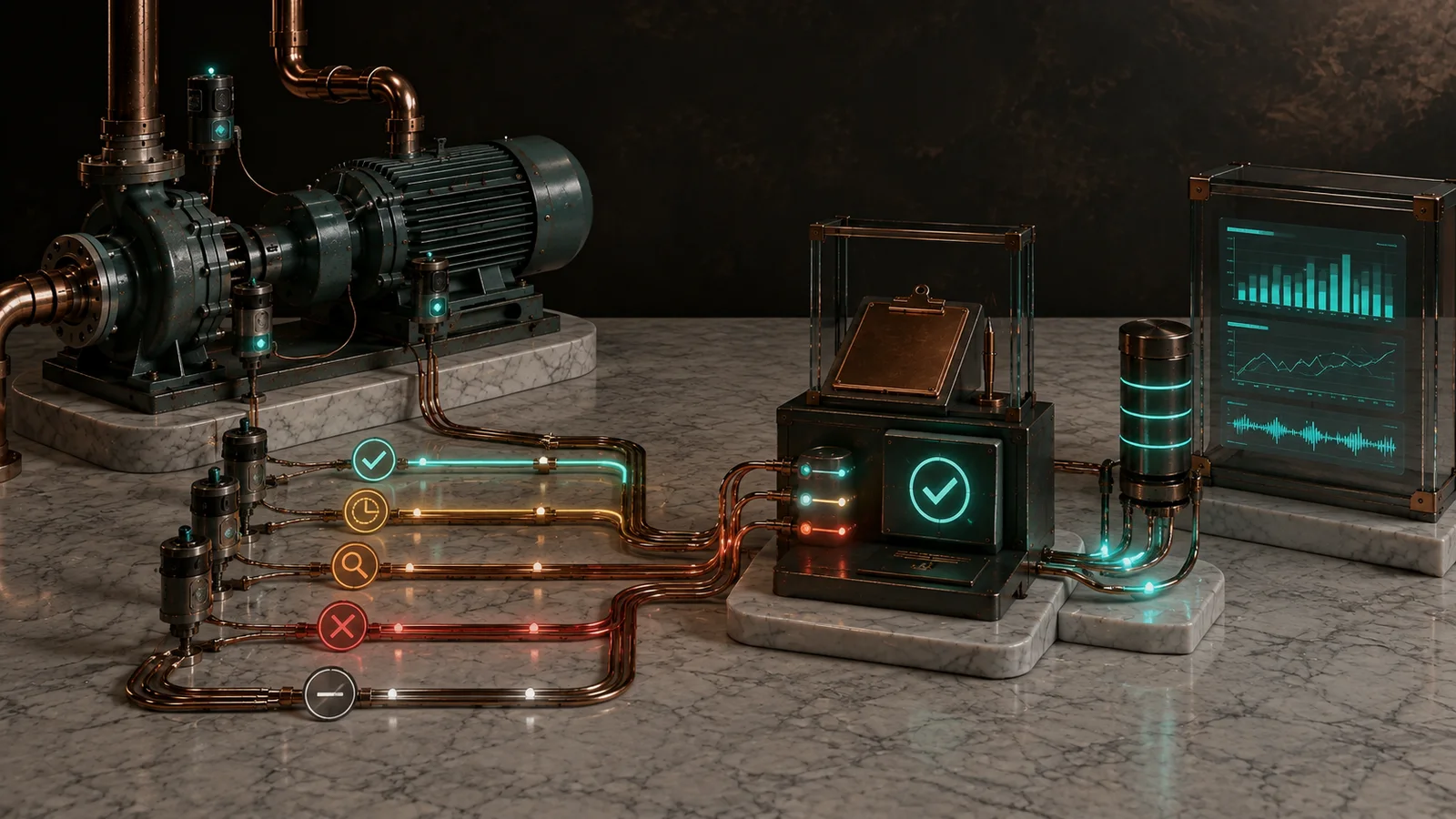
Illustrative Engineering Example
Sensor Trust & Telemetry Integrity
Qualify measurement identity, freshness, plausibility, completeness, and health before telemetry supports an alert, model, dashboard, or decision.
Review the example →8 examples
Controlled Industrial Intelligence
Bounded analytics, simulation, optimization, and assistance with explicit authority boundaries.
Illustrative Engineering Example
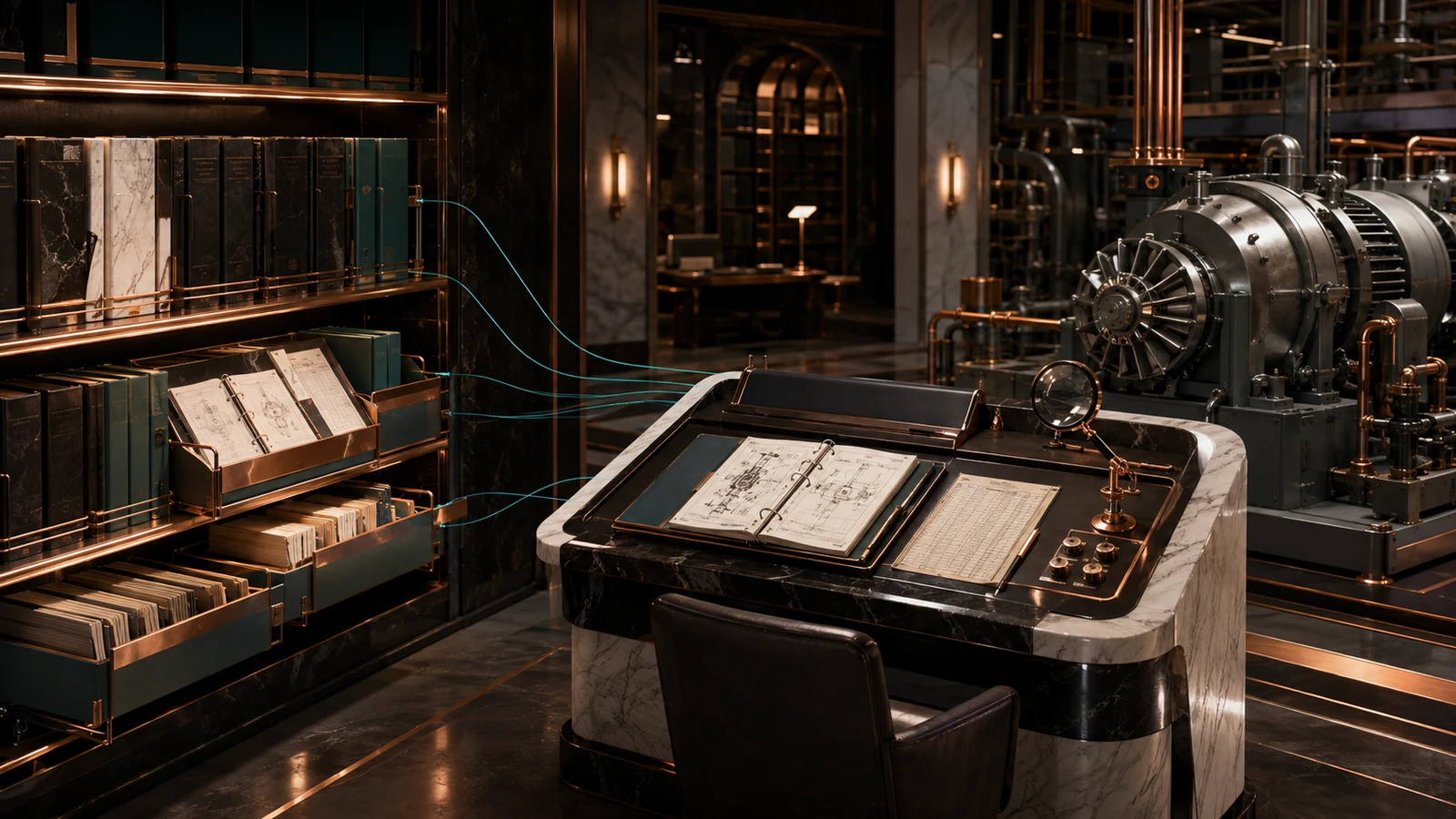
Approved Document Search Assistant
Help authorized personnel find, compare, and cite the correct approved manual, procedure, or maintenance record for a specific asset and revision.
Review the example →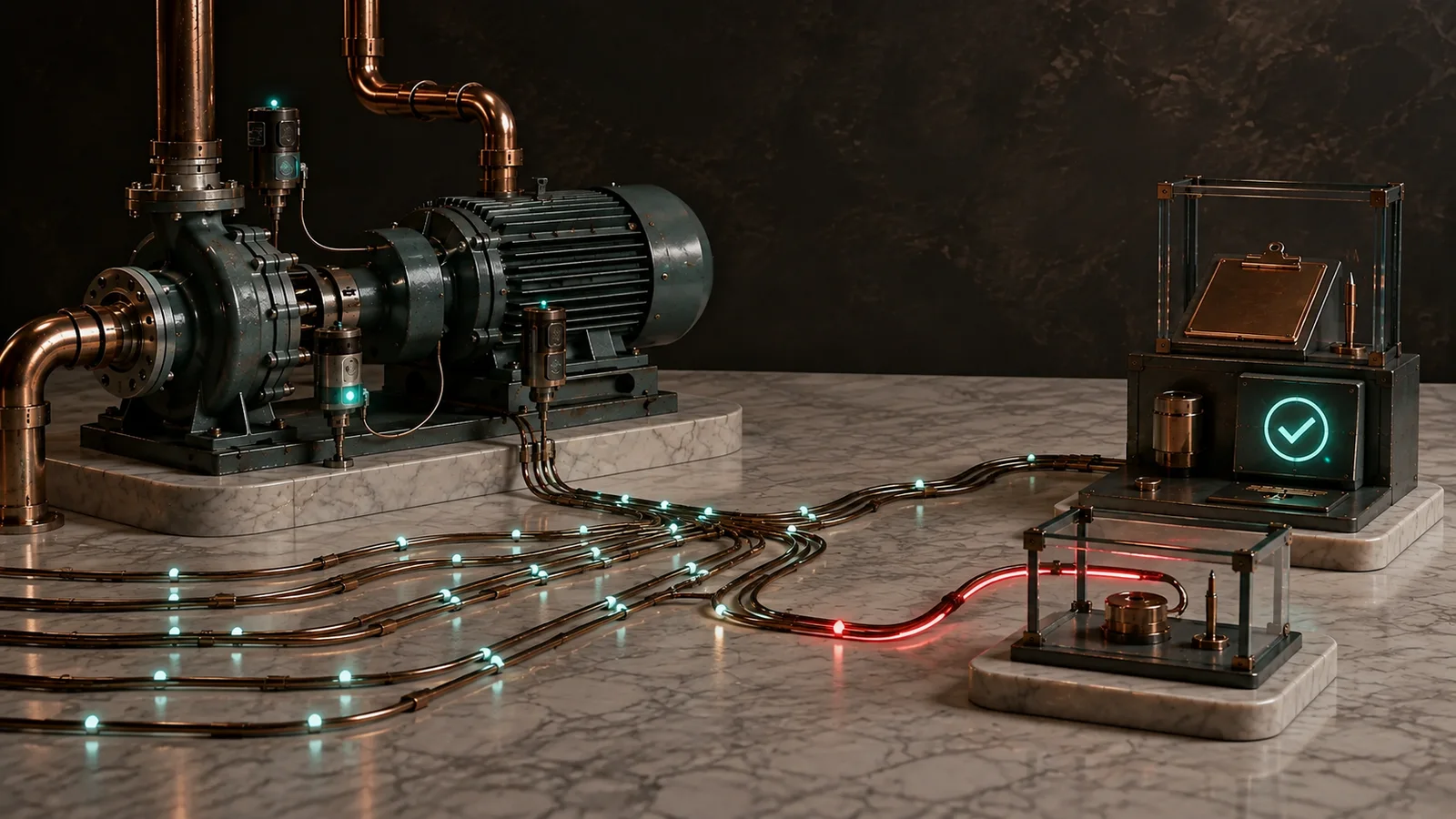
Illustrative Engineering Example
Process Anomaly & Deviation Intelligence
Recognize when multivariable operation departs from comparable normal behavior and present the evidence needed for focused investigation.
Review the example →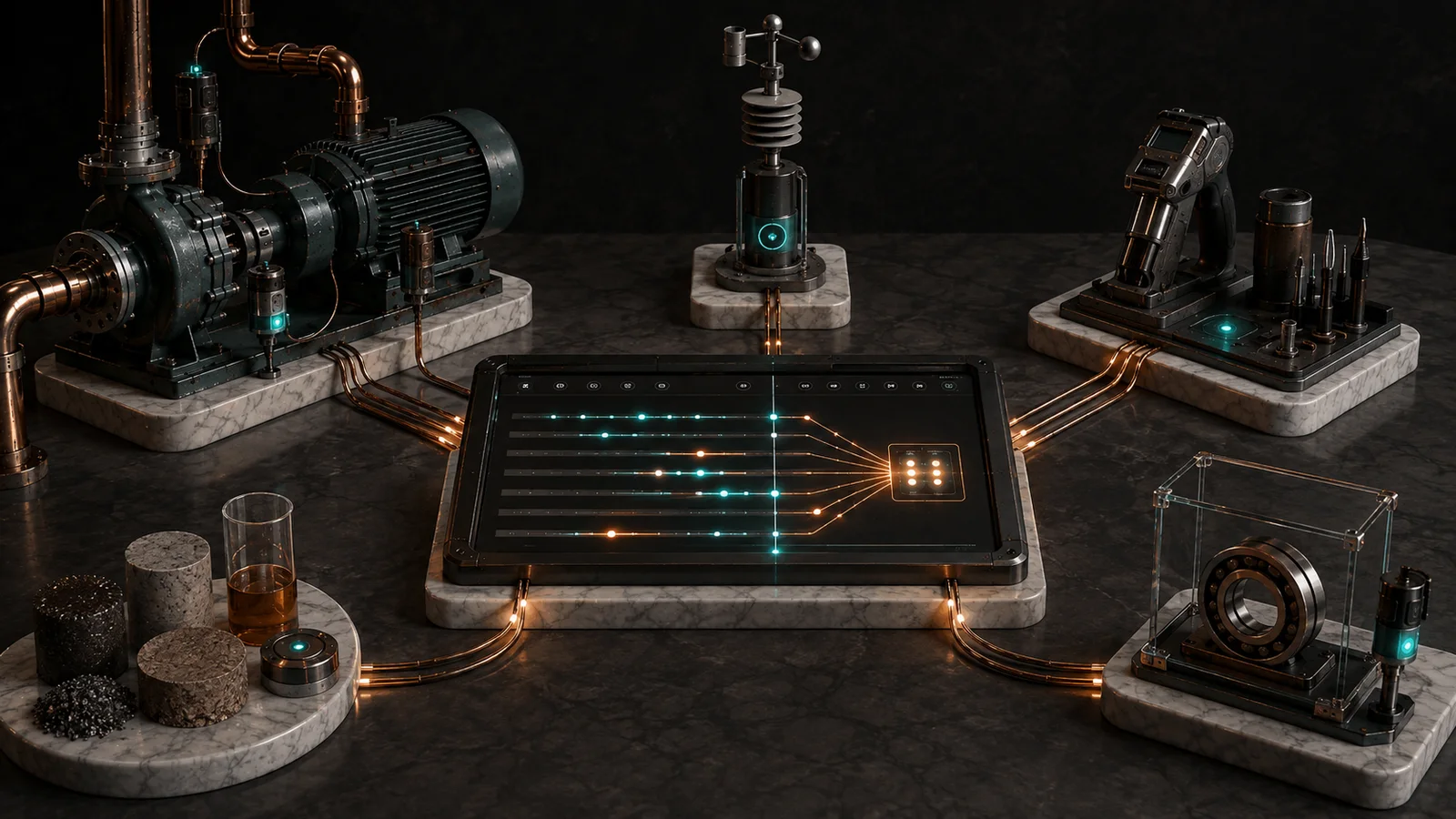
Illustrative Engineering Example
Root-Cause & Event Correlation Intelligence
Align equipment, process, material, environmental, maintenance, and quality events to narrow the causes worth investigating.
Review the example →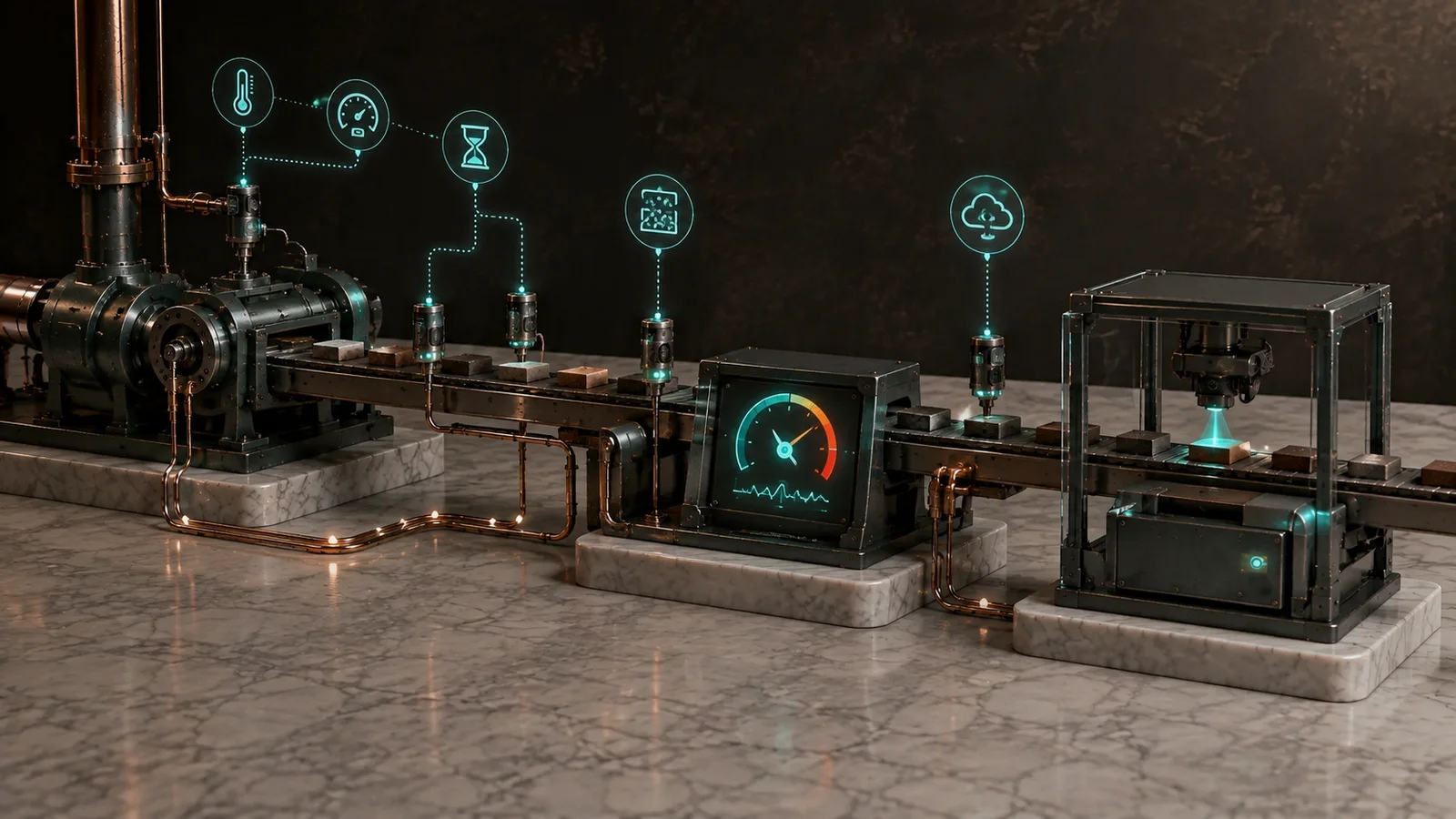
Illustrative Engineering Example
Quality Prediction & Process Drift Intelligence
Connect process history to measured quality outcomes so changing conditions can focus inspection and process review earlier.
Review the example →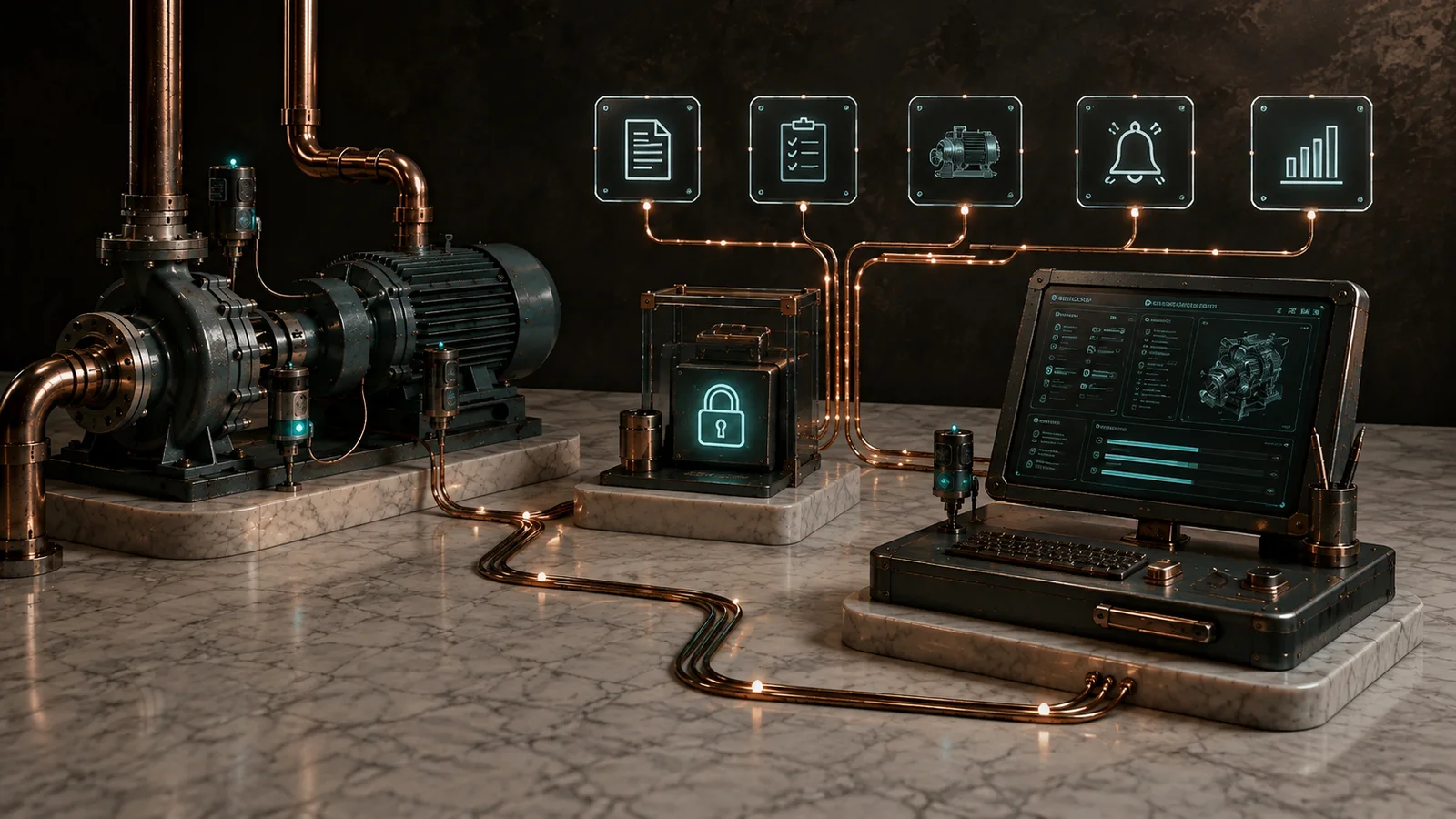
Illustrative Engineering Example
Contextual Operator Knowledge
Combine approved procedures with current operating state and recent history so a shift team can understand an active condition and prepare the right handoff.
Review the example →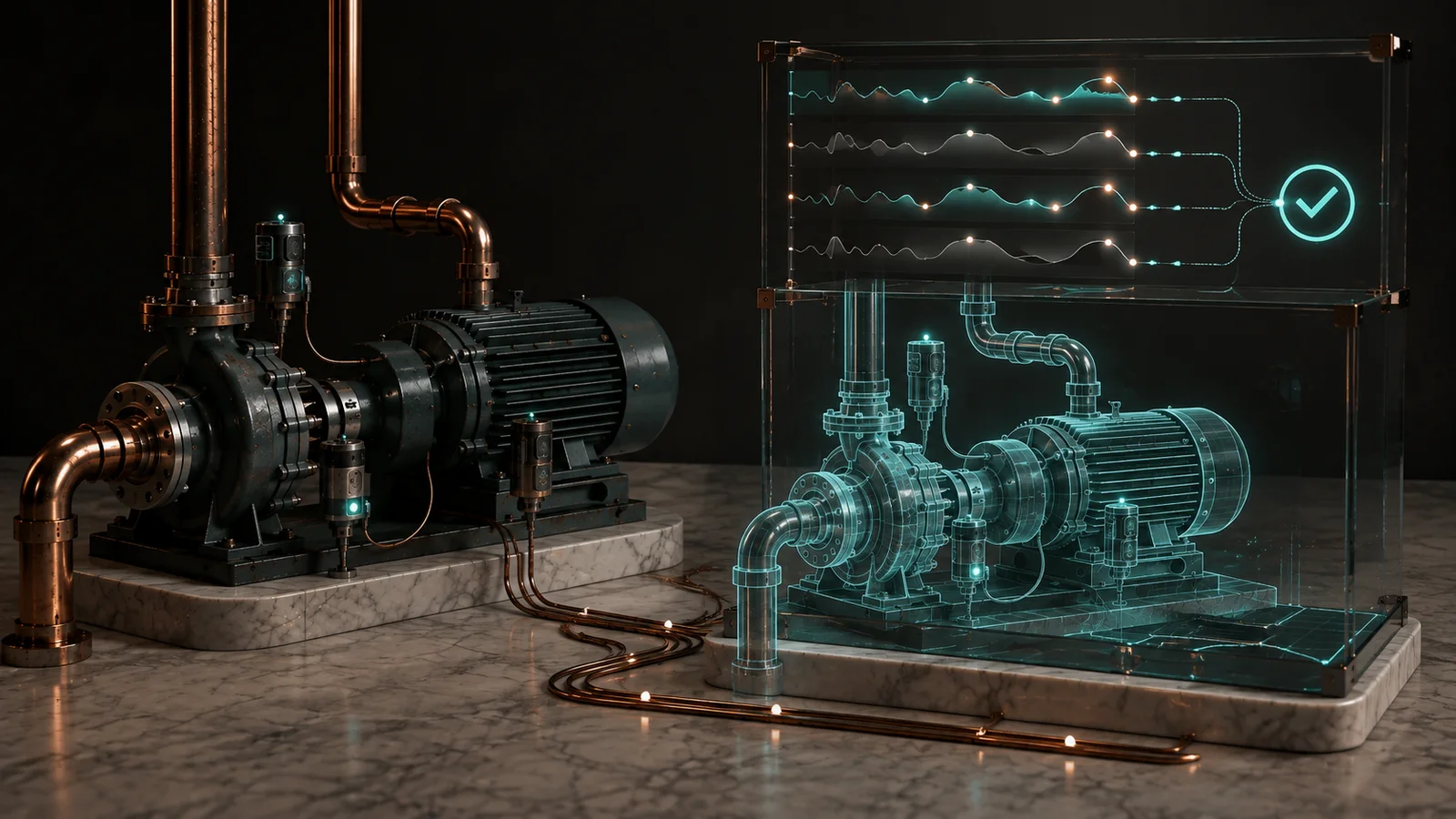
Illustrative Engineering Example
Digital Twin & Scenario Intelligence
Represent important physical states, relationships, capacities, and constraints so proposed operating changes can be compared before implementation.
Review the example →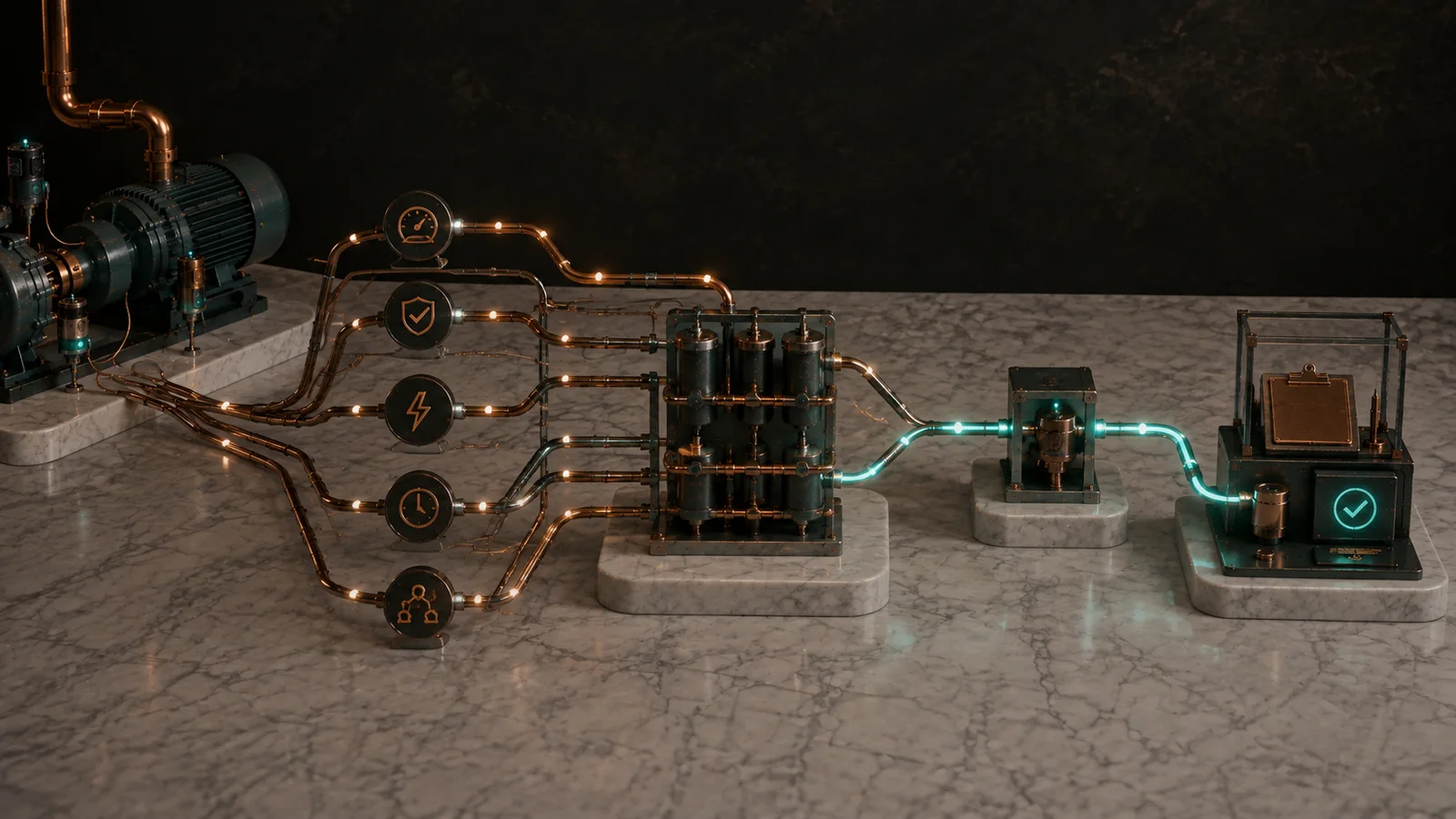
Illustrative Engineering Example
Operational Optimization & Recommended Strategy
Compare feasible operating plans against explicit objectives, constraints, forecasts, and tradeoffs to support a better next decision.
Review the example →
Illustrative Engineering Example
Bounded Industrial Agents & Workflow Intelligence
Coordinate approved information and business-system tasks through least-privilege tools, structured actions, current-state checks, and explicit approval points.
Review the example →Related practices
Connect industrial evidence to the next decision.
Industrial telemetry and operating records may lead to Data Analytics. Older equipment, disconnected workflows, or unclear ownership may lead to Structured Modernization.
Begin with the operating problem
Discuss an industrial operating problem.
Bring the condition, decision, or failure mode that is difficult to see today. We can define the evidence and smallest useful next step.
Start a private conversation