

Industrial Insights
Technical questions that should be answered before technology becomes operational.
Nineteen focused articles explain the evidence, architecture, tradeoffs, failure behavior, and decisions behind industrial sensing, maintenance, automation, AgTech, production, integration, security, and engineering management.

Curated reading paths
Follow a decision from foundation to application.
These sequences organize related questions so the library functions as a connected engineering resource rather than an accumulated article list.
Start with industrial monitoring
Build from a useful measurement to dependable local and connected evidence.
Start with predictive maintenance
Connect failure behavior, condition evidence, operating context, and verified maintenance outcomes.
Start with industrial AI
Decide where intelligent analysis is useful and where deterministic authority must remain.
Topic
Sensors & Telemetry

What Should You Measure Before Adding Industrial Automation?
Begin with the decision, failure mode, and operating evidence, not a shopping list of sensors.
Read insight →
How to Modernize Older Equipment Without Replacing It
Retrofit monitoring and integration can add visibility while preserving viable machines and operating knowledge.
Read insight →
Edge Computing vs. Cloud Processing for Industrial Systems
Place processing according to latency, continuity, data volume, security, support, and operating consequence.
Read insight →
What Happens to IoT Data When the Internet Goes Down?
A dependable telemetry design defines buffering, freshness, ordering, recovery, and local behavior before connectivity fails.
Read insight →Topic
Predictive Maintenance

Predictive Maintenance vs. Preventive Maintenance
Choose maintenance logic according to failure behavior, evidence, intervention opportunity, and consequence, not terminology.
Read insight →
What Data Is Actually Needed for Predictive Maintenance?
Condition signals become useful only when connected to operating state, failure modes, maintenance actions, and verified outcomes.
Read insight →Topic
Industrial Intelligence
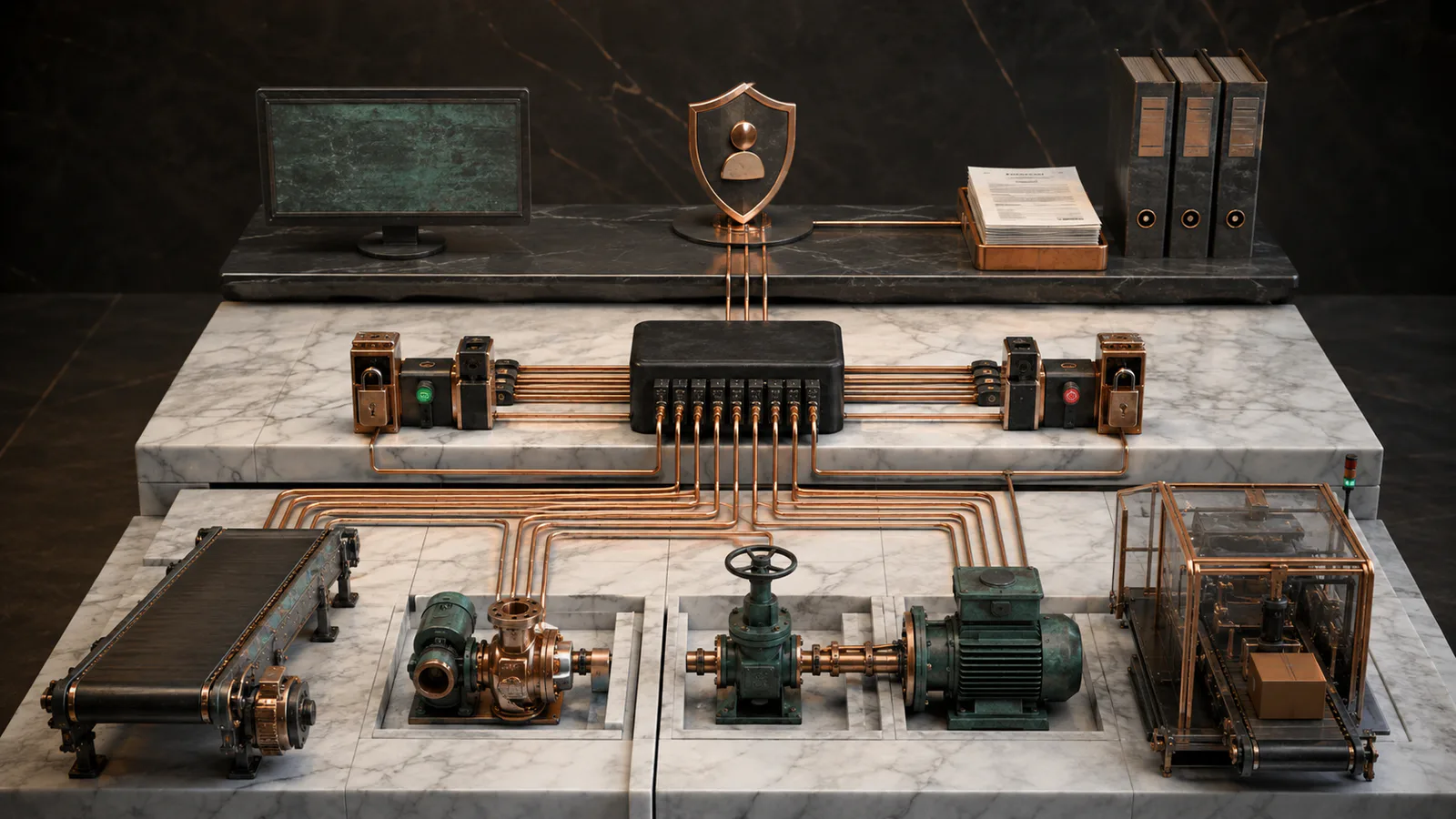
When a Simple Threshold Is Better Than Machine Learning
Use machine learning only when a direct, testable rule cannot adequately represent the useful operating relationship.
Read insight →
Where AI Belongs in Industrial Automation and Where It Does Not
AI can support interpretation, prediction, and knowledge retrieval while deterministic systems retain consequential authority.
Read insight →Topic
AgTech

What Should a Vertical Farm Measure?
Connect environmental, root-zone, equipment, crop-stage, resource, labor, and harvest evidence around the questions the grower needs to answer.
Read insight →
How Environmental Data Can Explain Crop Variability
Compare crop cycles using aligned environmental history, equipment behavior, interventions, and outcomes without confusing association with cause.
Read insight →
Using Machine Learning for Yield Forecasting
A useful yield forecast requires stable crop identity, complete cycle history, honest validation, uncertainty, and a planning decision that can use it.
Read insight →Topic
Production & Operations

How to Find a Production Bottleneck Using Operational Data
Connect machine states, queues, changeovers, materials, labor, quality, and schedules to find the constraint limiting useful output.
Read insight →Topic
Industrial Data Architecture

What Is an Industrial Data Model?
Stable identities and relationships turn isolated sensor values into evidence about a site, line, machine, component, and operating event.
Read insight →Topic
Reliability & Resilience

What Should Happen When an Edge Device Fails?
Edge failure behavior should preserve local safety, expose lost visibility, protect buffered evidence, and support deliberate recovery.
Read insight →Topic
Energy & Resource Efficiency

How to Measure Energy per Unit Produced
Connect metered consumption to machine state, production time, accepted output, and product context before judging efficiency.
Read insight →Topic
Machine Vision & Inspection

When Is Computer Vision Appropriate for Quality Inspection?
Vision is useful when the feature is observable, presentation can be controlled, and uncertain results have an accountable disposition path.
Read insight →Topic
Systems Integration
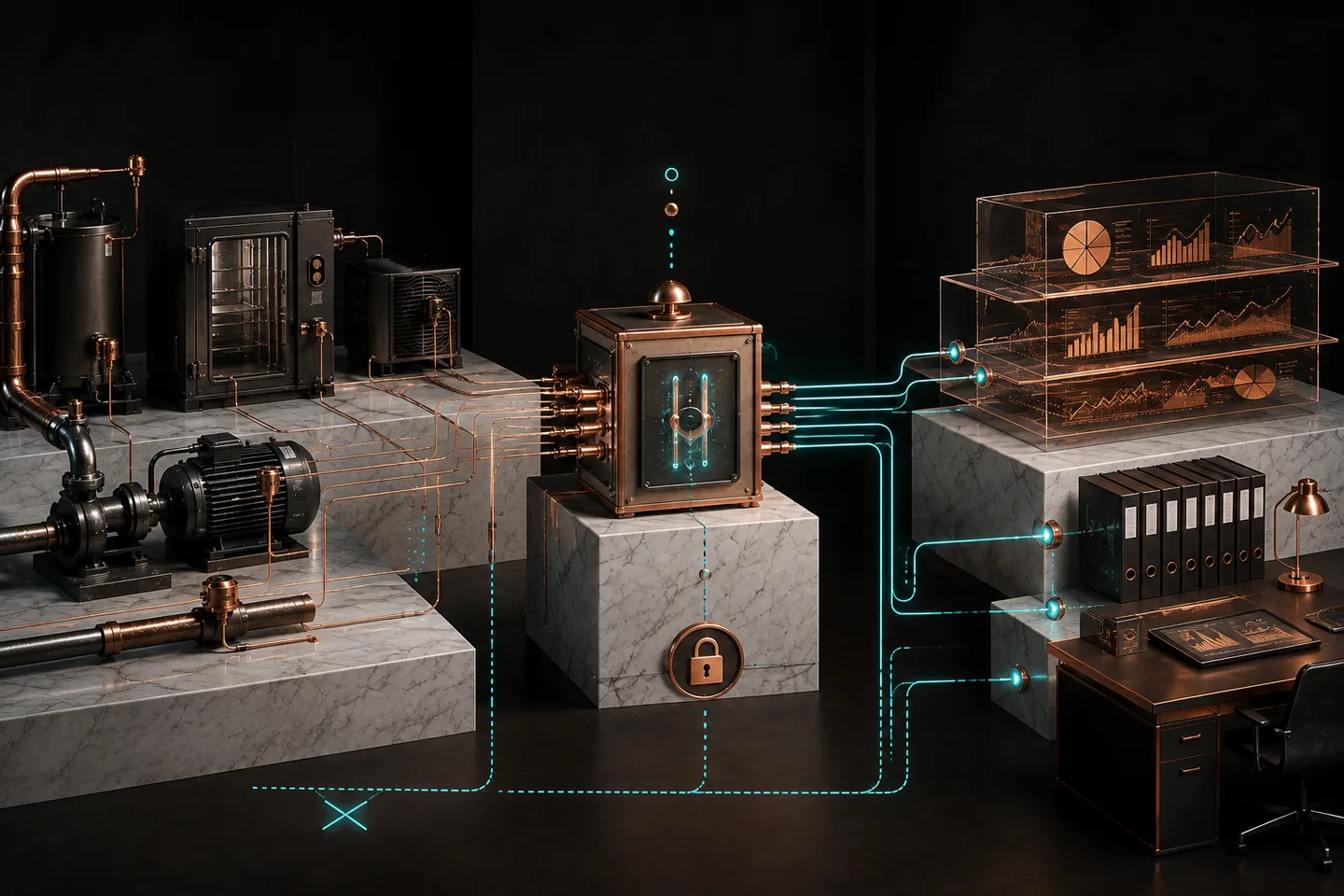
How Should PLC Data Connect to Business Applications?
A separate integration boundary can translate machine state into business context without making production control depend on an enterprise application.
Read insight →Topic
Industrial Cybersecurity

What Changes When Previously Isolated Equipment Becomes Connected?
Connectivity adds operational value and a new trust boundary that requires identity, segmentation, access control, monitoring, and recovery.
Read insight →Topic
Engineering Management

How Should an Industrial Proof of Concept Be Evaluated?
A useful pilot proves defined feasibility, evidence quality, operating value, limitations, and scale conditions rather than merely producing a demonstration.
Read insight →