

Condition · Risk · Maintenance
Prediction begins with dependable equipment history, not a model.
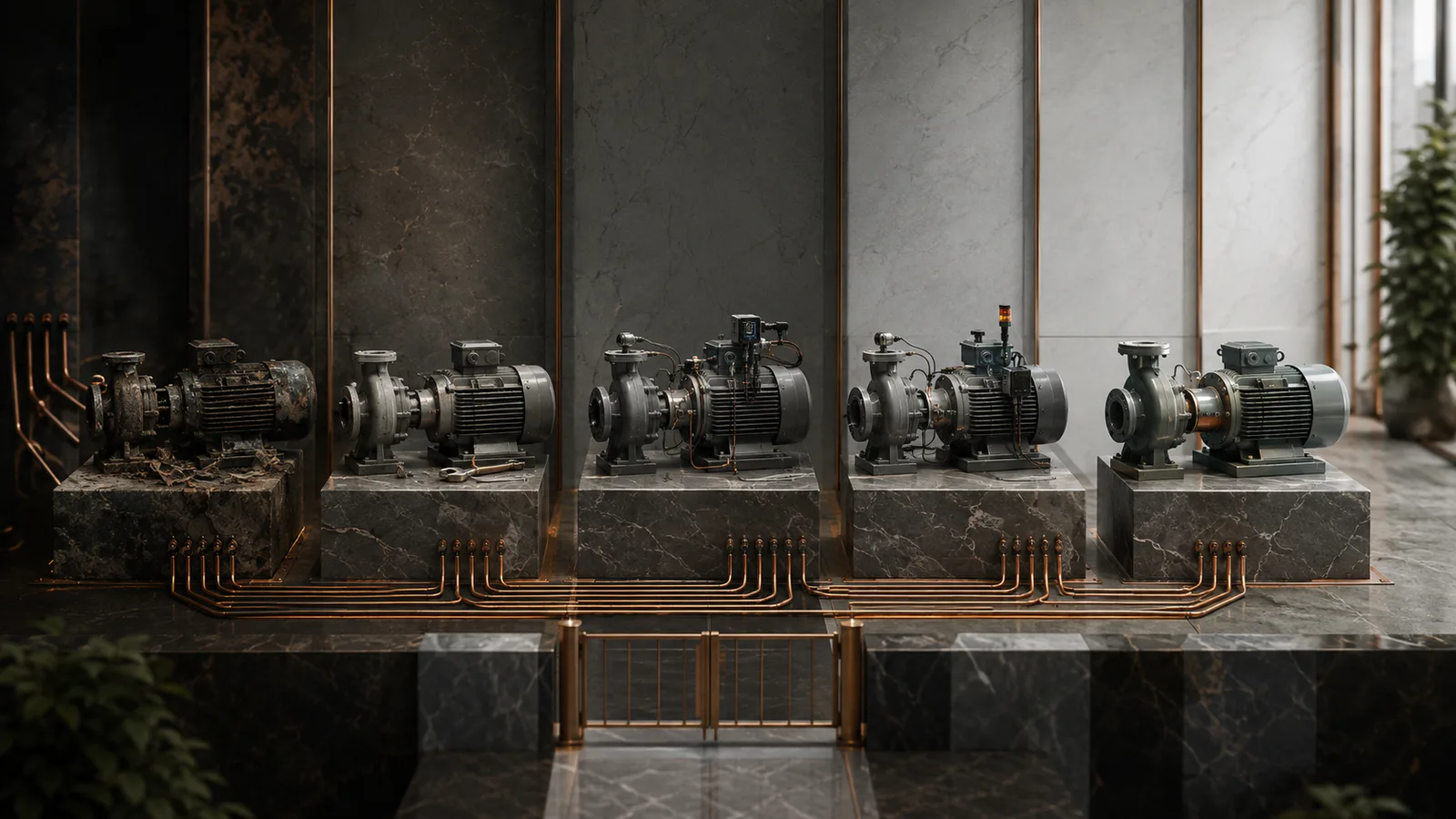
Progress from reactive repair toward condition-based and predictive decisions at the pace supported by the assets, failure modes, measurements, maintenance records, and operating evidence.
Operating purpose
Why the business should care.
Unexpected failure can disrupt production, damage quality, create expensive emergency work, and obscure the operating conditions that led to the event. Fixed preventive schedules can reduce some risk, but may also replace parts too early or miss failures that develop between intervals.
Condition monitoring adds evidence about how an asset is actually behaving. Predictive methods become credible only after equipment identity, operating context, maintenance history, failure definitions, sensor baselines, and data quality are dependable.
Useful capability
What can become visible or easier to coordinate.
Reactive
Repair after failure. The immediate objective is restoration and preservation of useful failure evidence.
Preventive
Perform maintenance on a defined time, runtime, or cycle schedule based on known needs.
Condition-based
Inspect or intervene when measured behavior changes beyond an understood condition.
Predictive and prescriptive
Estimate risk or remaining useful life, then compare intervention timing against cost, downtime, consequence, and operating demand.
High-level approach
How the work is structured.
Define the asset and failure mode
Establish which equipment matters, how it can fail, how failure is confirmed, and what consequence the business is trying to reduce.
Create a reliable baseline
Connect runtime, cycles, loads, environment, maintenance events, alarms, and relevant sensor measurements under stable asset identity.
Detect meaningful change
Use engineering thresholds, trend analysis, anomaly detection, or models appropriate to the evidence and decision horizon.
Review in operating context
Compare the signal with production demand, recent service, environmental changes, sensor health, and known operating states.
Close the maintenance loop
Record inspection, intervention, parts, confirmed condition, false alerts, and outcome so future decisions improve.
Operating safeguards
How the business keeps control.
- A model score is an input to maintenance judgment, not proof that a failure will occur.
- Sensor failure, drift, missing data, and changed operating regimes are monitored separately from equipment condition.
- Maintenance recommendations identify the asset, evidence, time horizon, uncertainty, and appropriate reviewer.
- Safety-related inspection and maintenance requirements are not replaced by a statistical model.
- Alerts are reconciled with inspections and outcomes so false positives and missed conditions remain visible.
Business evidence
Measurements used to support decisions.
Each measure is tied to a stable definition, source record, baseline, and named decision.
Engineering examples
How the connected operation works.
Pump performance degradation
- Operating problem
- A pump continues running while flow declines and energy demand rises.
- Information used
- Flow, pressure, current, vibration, temperature, command state, runtime, and maintenance history.
- Working approach
- Expected operating relationships are compared with current behavior; a sustained multi-signal deviation creates a condition review rather than an automatic shutdown.
- Business value
- Maintenance can inspect the asset with supporting context before loss of function becomes an emergency.
Refrigeration condition monitoring
- Operating problem
- Compressor behavior changes gradually before product temperature is visibly affected.
- Information used
- Temperature recovery, compressor cycling, current, ambient conditions, door events, alarms, and service history.
- Working approach
- Trend and change-point analysis distinguishes operating-load changes from persistent performance drift and sensor problems.
- Business value
- Earlier, more focused review while required food, product, and safety procedures remain authoritative.
Begin with the operating condition
Discuss what the operation needs to measure, connect, or control.
We can help establish the requirement, available evidence, practical architecture, and responsible next step.
Start a private conversation