
The Virtual Agent
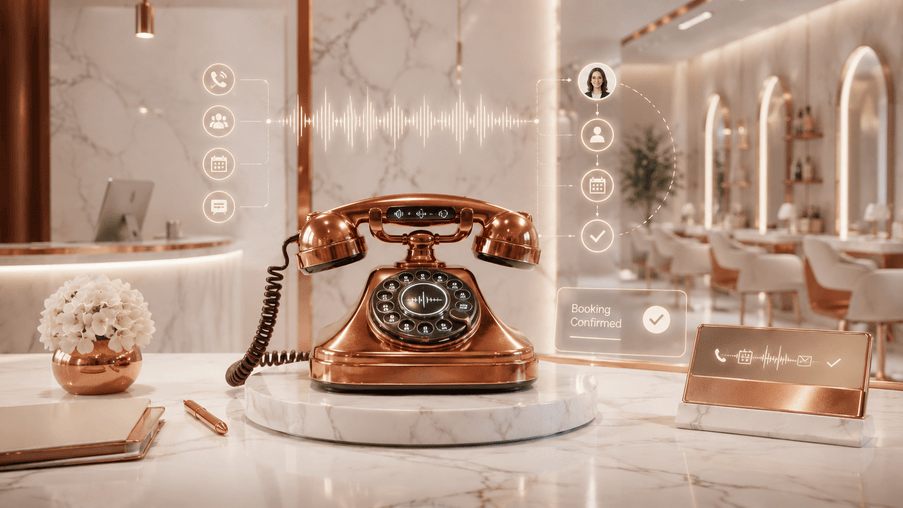
A Phone Concierge That Protects the Client Experience
Answer more calls without pulling attention away from the client in the chair.
The phone is often the first moment of trust and the first opportunity to convert interest into an appointment. It is also one of the most common interruptions inside a busy salon.
Adaptiv Stratum provides carefully configured phone coverage for missed calls, after-hours demand, booking requests, and structured follow-up. Your current booking workflow remains in place, and situations that require judgment remain with your team.
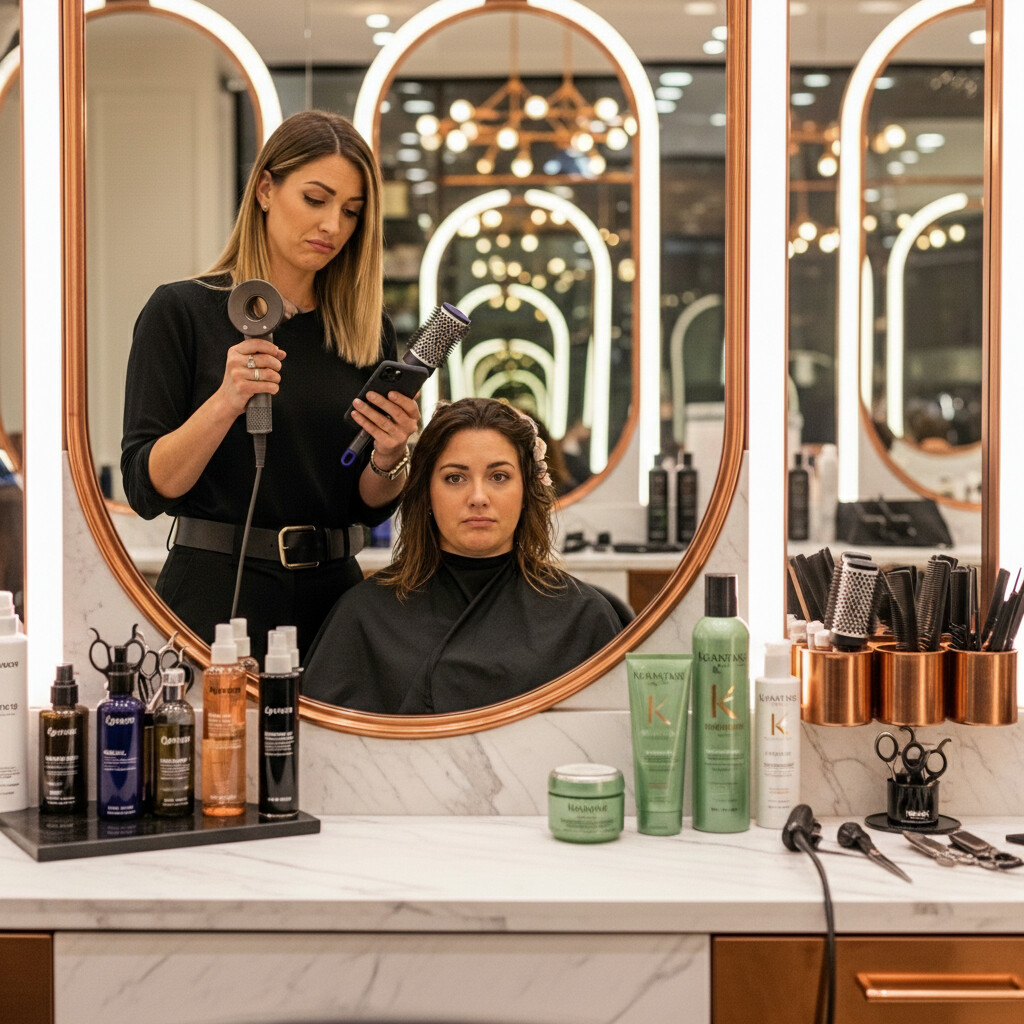
The Call Is Revenue. The Interruption Is Cost.
When the phone rings during a service, the business is forced into a trade-off.
Ignore the call, and the next booking may disappear. Answer it, and the client in the chair loses the full attention they are paying for.
A phone concierge removes that conflict. It responds to the caller, identifies what they need, and handles defined requests without forcing staff to divide their attention.
- Inbound demand is answered without interrupting active service.
- Booking intent is captured while the caller is ready to act.
- The in-chair experience remains protected because staff can stay present.
- Unresolved situations remain visible instead of disappearing into voicemail.
Human Service Remains Central
This is not a choice between personal service and automation.
Your team should remain focused on the client in front of them. Callers should still receive a polished, useful response. The phone concierge operates between those two needs.
Clear requests can be handled immediately. Requests involving nuance, exceptions, complaints, or sensitive judgment move to a person.

Caution Is Appropriate
A salon that has built its reputation on trust should be careful about anything that speaks to clients or changes the calendar.
Poorly configured automation can sound generic, misunderstand a service, bend a policy, promise unavailable time, or create work the team has to repair later.
Adaptiv Stratum configures the phone concierge around your services, calendar, terminology, policies, staff rules, and escalation boundaries.
- No invented availability
- No policy exceptions without approval
- No silent service substitutions
- No unsupported appointment changes
- No guessing when the request is unclear
Clients Do Not Only Decide During Business Hours
Booking intent often appears after dinner, during a commute, between meetings, or late at night when the client finally has time to think.
A voicemail asks the caller to wait. By the time the business responds, the moment may have passed or the appointment may have been booked elsewhere.
After-hours coverage allows defined requests to be handled when intent is strongest without requiring the owner or staff to remain available around the clock.
- Immediate response: callers are acknowledged when the business is closed.
- Booking support: available appointment options can be offered when the calendar supports them.
- Fewer callback loops: simple requests do not need to wait until the next workday.
- Clear morning visibility: unresolved requests and call outcomes remain available for review.

It Should Sound Like Your Business
An established salon should not sound like a call center.
The voice, vocabulary, and service language are configured around the way your business communicates. If you call clients “guests,” the system should use the same language. If the brand is polished and restrained, the phone experience should reflect that.
Tone can adapt to the business. Operating rules remain precise.
- Brand-aligned language: terminology reflects how your team speaks.
- Consistent policy language: pricing, deposits, and cancellation rules are stated as approved.
- Natural interaction: callers are not forced through a rigid phone tree.
- Professional handoff: staff receive useful context when they need to step in.
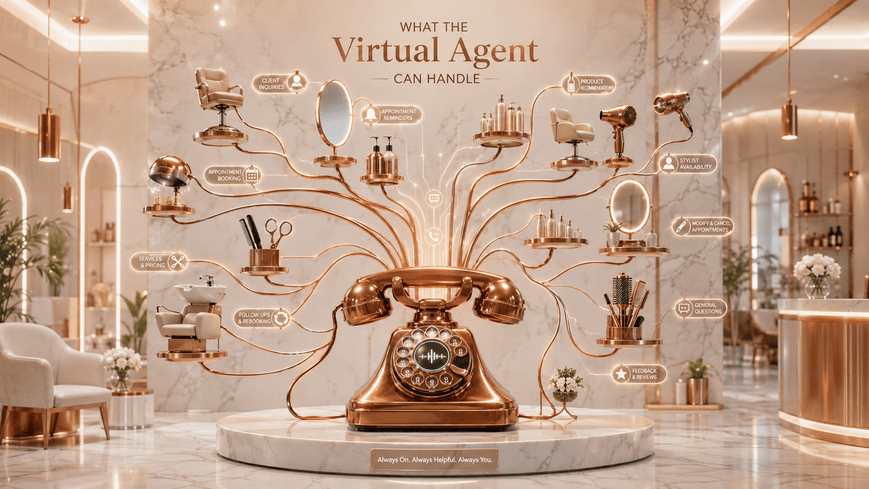
What the Phone Concierge Can Handle
The service is designed for defined, repeatable interactions that do not require staff judgment.
- New appointment requests
- Availability questions
- Rescheduling requests
- Cancellation requests
- Basic service questions
- Approved pricing and policy explanations
- After-hours intake
- Overflow calls during busy periods
- Structured messages for staff
- Escalation when human judgment is required
It is not designed to handle every situation. It is designed to handle clearly defined situations reliably.

Clear Boundaries Protect the Business
Safe phone coverage depends on knowing when not to proceed.
- It will not invent availability.
- It will not override the source calendar.
- It will not make policy exceptions.
- It will not guess when a service is unclear.
- It will not silently substitute one service for another.
- It will not cancel or change an appointment without confirmation.
- It will not force automation onto a request that requires human judgment.
- It will not replace owner judgment or staff relationships.
Built Around Control, Not Hype
The phone concierge is introduced through a controlled process. It is configured, tested, reviewed, activated in stages, and monitored after launch.
Coverage can begin conservatively with after-hours or overflow calls. The business does not need to hand over the entire phone experience on the first day.
- Live availability checks: appointment options are checked against the source calendar.
- Existing system of record: your current booking platform remains authoritative.
- Rule-bound booking: services, durations, staff restrictions, and policies are applied as configured.
- Defined escalation: unclear or sensitive requests move to a person.
- Limited rollout: activation can begin during selected hours or call conditions.
- Reviewable outcomes: the owner can see what happened and why.
- Reversible routing: coverage can be paused or disabled when needed.
What the Owner Sees
Confidence comes from visibility. The owner should not have to wonder what happened during a call.
Call outcomes can be summarized in a simple format rather than requiring another dashboard to monitor.
- Caller name or available identifier
- Time of call
- Reason for calling
- Service requested
- Staff preference, when provided
- Booking outcome
- Cancellation or rescheduling outcome
- Escalation reason
- Unresolved follow-up need
- Repeated questions or recurring call patterns
The purpose is not to create more reporting. It is to give the owner a clear view of what was handled, what converted, and what still needs attention.
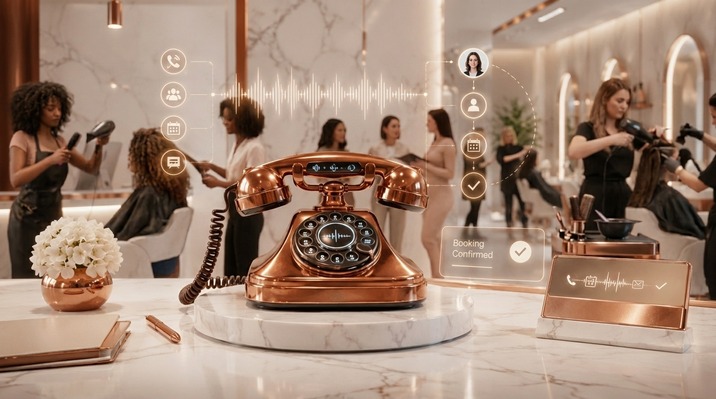
Where This Fits Best
The service is best suited for appointment-based businesses with meaningful inbound demand and enough operating structure to support reliable phone coverage.
- Established salons, barbershops, spas, studios, and service businesses
- Businesses that miss calls during active service
- Operators receiving after-hours booking interest
- Teams regularly interrupted by calls during appointments
- Owners who want better coverage without adding full front-desk capacity
- Businesses with defined services, policies, pricing language, and booking rules
- Operators who want supervised implementation rather than unmanaged software
It is not a strong fit for businesses with unclear service definitions, constantly changing rules, inconsistent pricing, or informal booking practices that change from one call to the next.
Implementation Is Supervised
The phone concierge is configured around the business before it is introduced to live callers.
- Operational intake
Services, durations, pricing, policies, staff rules, and escalation conditions are documented. - Coverage design
After-hours, overflow, limited, or broader coverage is selected according to business need. - Configuration
Approved service mappings, booking boundaries, and client-facing language are prepared. - Simulation testing
Booking, rescheduling, cancellation, and escalation scenarios are tested before live use. - Owner review
Tone, behavior, language, and operating boundaries are reviewed before activation. - Limited rollout
Initial activation begins in a controlled or lower-risk setting where appropriate. - Stabilization
Outcomes are reviewed and adjusted before coverage is expanded.
Activation is progressive, not abrupt.
Data Protection and Owner Control
The phone concierge may require access to scheduling, service, appointment, and limited client information to perform approved functions. That access is treated as operational support, not as a separate data asset.
- No resale: client records are not sold.
- No cross-business pooling: your booking activity is not combined with other businesses.
- No external model training: your client list and appointment history are not used to train public systems.
- Scoped access: access is limited to what is required for the approved service.
- Revocable permissions: owner-controlled access can be removed according to platform requirements.
- Minimal retention: unnecessary information is not retained when it is not required to deliver the service.
The Real Decision
The question is not whether technology should replace your front desk.
The question is whether missed calls, after-hours demand, callback delays, and service interruptions should continue to operate as invisible losses.
A properly configured phone concierge gives the business a controlled way to respond to more demand while preserving the client experience and keeping judgment with the team.
Coverage can begin in a limited form, be evaluated against real outcomes, and be paused if it does not provide clear value.

Determine Whether It Fits Before You Deploy It
If your business is missing calls, losing after-hours demand, or interrupting staff during client service, the next step is a focused review.
We will examine the current call flow, booking rules, policy structure, and readiness for supervised phone coverage.