

Illustrative operating example · Field and Property Services · Landscaping
Estimating and Route Planning With a Common Operating View
Use verified property information, job-cost history, crew capability, equipment, and geography to reduce avoidable travel and improve planning.
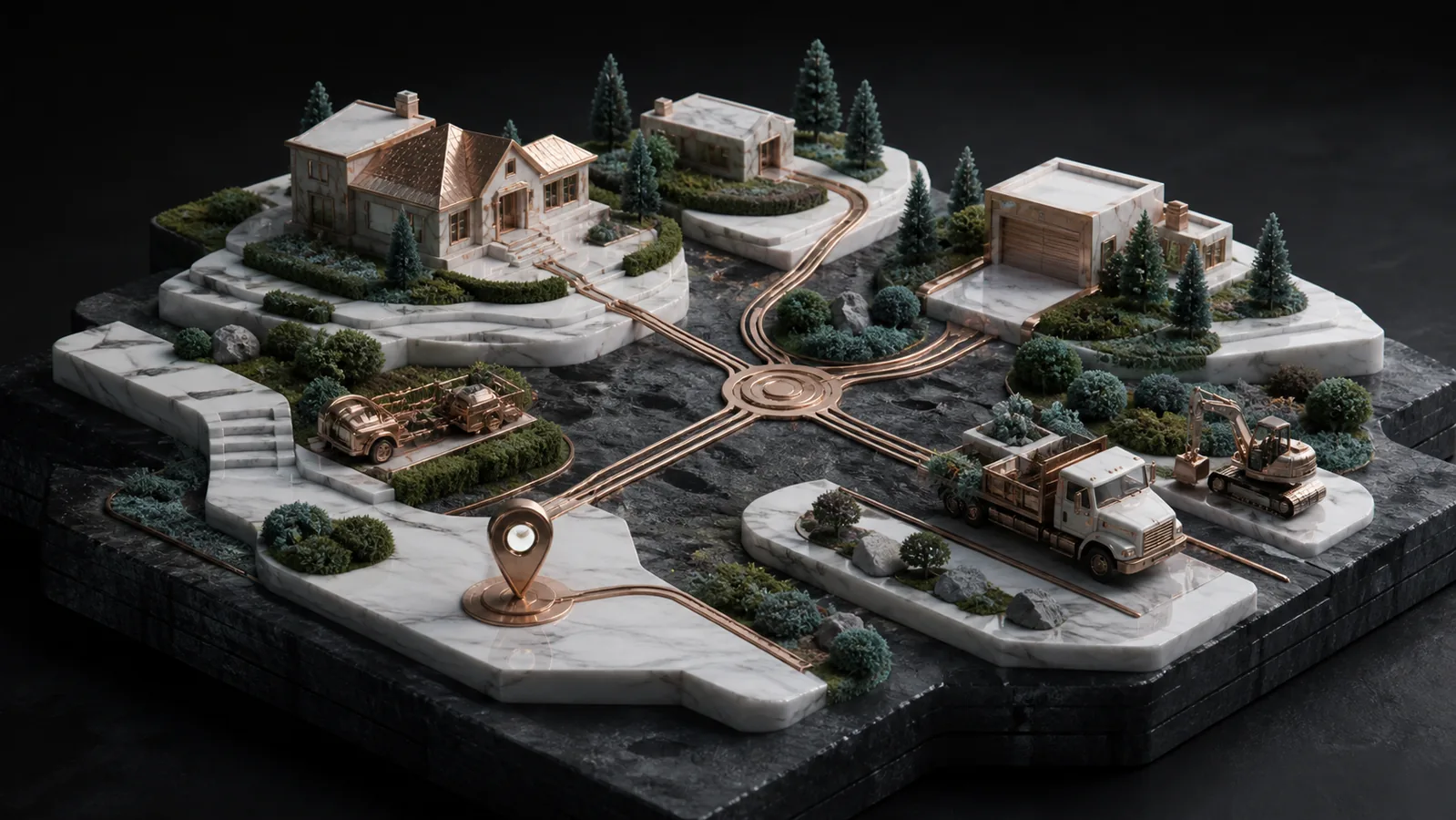
The operating situation
A capable business can still be limited by disconnected information.
Landscaping businesses may send an estimator to every property, plan routes separately from job costing, and keep supplier or equipment information in other systems.
Connecting these records can help reserve field visits for the work that truly requires them and make route decisions with better cost context.
- Estimator travel for routine work
- Measurements stored outside the estimate
- Routes planned without job-cost context
- Crew and equipment constraints discovered late
- Supplier pricing disconnected from proposals
The working model
How the operation becomes easier to run.
Build a verified property record
Retain measurements, service history, access notes, site constraints, and the source of each fact.
Connect scope to cost
Combine labor assumptions, equipment, materials, supplier information, and historical completion data.
Plan executable routes
Consider geography alongside crew skills, equipment availability, service windows, and realistic job durations.
Before and after
From scattered activity to one visible workflow.
Estimator travel for routine work. Measurements stored outside the estimate. Routes planned without job-cost context.
Build a verified property record. Connect scope to cost. Plan executable routes.
Connected information
Systems involved
- Property and mapping data
- Estimating
- Job-cost history
- Crew scheduling
- Fleet and equipment
- Suppliers and accounting
Management visibility
What becomes measurable
- Estimator travel
- Quote turnaround
- Estimated versus actual job cost
- Crew travel time
- Route density
- Equipment conflicts
Example workflow
How the team uses the system.
A routine maintenance opportunity can begin with an existing verified property record and recent imagery. The system can prepare a preliminary scope and identify missing facts. A person reviews the estimate and decides whether a site visit is necessary before anything is promised.
Example output
A useful operating view, ready for a decision.
The view brings the relevant records together and shows what needs attention, who owns the next action, and whether the work reached its intended outcome.
- Estimator travel
- Quote turnaround
- Estimated versus actual job cost
Next action: review the highlighted exception with the responsible team member.
How the work begins
Start with one decision and one workflow.
The first conversation identifies the owner of the process, the records already available, the recurring exception, and the result the business needs to see.
Bring
A person who knows the work, a few representative records, and one recent example of the problem.
Receive
A current-state map, a short list of constraints, and a prioritized next step with clear tradeoffs.
Proceed
Retain, repair, integrate, buy, modernize, or build only after the requirement and acceptance conditions are visible.
Your operation
What would a clearer operating view reveal?
Start with the decisions that are difficult to make today and the information already available to support them.
Request an operating review