
Strategic Simplification: Why Service Menu Bloat Erodes Performance

Growth often triggers expansion. A new treatment is introduced. A premium tier is added. A bundled package appears. Over time, what began as a focused service offering becomes layered, fragmented, and difficult to navigate.
The result is not diversification. It is operational drag.
Within most mature service menus are underperforming entries that remain visible but generate minimal contribution. They consume cognitive space, scheduling bandwidth, and inventory, while delivering negligible return.
The Cost of Complexity
Complexity reduces conversion, increases error rates, and weakens operational clarity.
- Client decision friction: Excessive variations, tiers, and overlapping descriptions create hesitation. When options become difficult to distinguish, prospective clients delay or abandon booking.
- Scheduling distortion: Incorrect duration selection destabilizes the calendar. A 30-minute booking for a 60-minute requirement cascades into downstream compression and service degradation.
- Inventory inefficiency: Stock maintained for infrequently booked treatments represents idle capital. Low-frequency services rarely justify ongoing operational overhead.
Every additional service increases administrative complexity. Not all additions increase enterprise value.
Data as an Instrument of Precision
Rational pruning requires evidence, not instinct. Structured analytics reveals which services support retention, which create friction, and which operate as dead weight.
- Service pathway analysis: Identify patterns in how clients book. If a service is rarely selected independently but commonly appended to another, restructure it as an add-on rather than a standalone option.
- Acquisition quality review: Evaluate whether certain promotions or specialty offerings produce long-term clients or one-time transactions. Low-retention acquisition channels dilute brand equity.
- Duration variance tracking: Compare booked time against actual completion time. High variability disrupts automation rules and calendar integrity. Simplification improves predictability.
Operational Leverage Through Subtraction
Discipline in service architecture often produces greater growth than expansion.
A focused, high-performing menu:
- Reduces booking friction
- Improves schedule predictability
- Simplifies staff training
- Enhances automation reliability
Strategic subtraction clarifies positioning. It strengthens operational flow. It reinforces brand coherence.
Clarity as Competitive Advantage
Premium operators are defined as much by restraint as by expansion. Removing underperforming services concentrates demand into a more stable, higher-yield core.
Growth does not require more options. It requires better alignment between service architecture, client demand, and operational execution.
When complexity is reduced, throughput improves. When throughput improves, profitability follows.
You should also read:

Gross Revenue Is Activity. Net Revenue Is Performance.
Every business owner sees the same number at the top of the daily report: Total Sales. It is large. It feels validating. It reflects effort. But gross revenue measures activity, not performance. It shows how much money passed through the system. It does not show how much value was retained. If a business records $1,000 in sales but issues $200…
Continue reading...
Communication Preferences Are Shifting. Service Businesses Must Adapt.
Client communication behavior has evolved. What was once considered efficient is now perceived by many as intrusive or inconvenient. For some clients, a phone call remains direct and effective. For others, particularly digitally native demographics, a phone call introduces unnecessary friction. It requires immediate attention, synchronous availability, and social energy. When booking requires voice interaction as the only pathway, a…
Continue reading...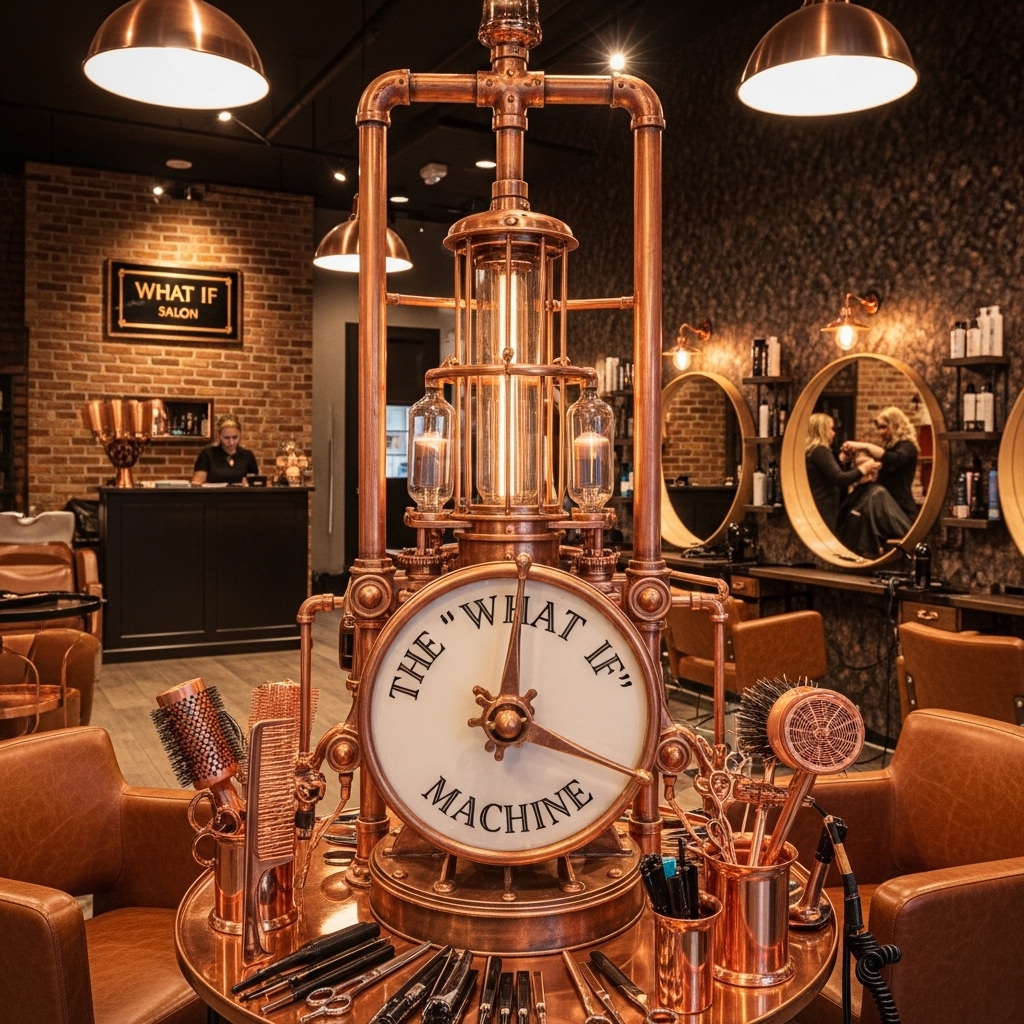
The “What If” Machine: Modeling Strategic Decisions Before You Commit Capital
Appointment-based businesses are governed by high-leverage decisions. Adjust pricing. Modify operating hours. Remove or introduce services. These decisions are often made intuitively. Intuition is useful, but it is not a control system. When the margin for error is thin, miscalculation is expensive. The alternative is simulation. Historical reporting explains what happened. Strategic modeling estimates what will happen if variables change.
Continue reading...
The Silence of Great Service: Why Interruptions Cost More Than Time
In premium service environments, the deliverable is not limited to technical execution. It includes attention, presence, and continuity. When a client sits in the chair, there is an implicit agreement: for the duration of the appointment, focus is undivided. Whether expressed through conversation or quiet concentration, that uninterrupted engagement defines the experience. Then the phone rings. A single interruption forces…
Continue reading...