
The Human Premium: Why You Should Not Pay People to Perform Machine Work
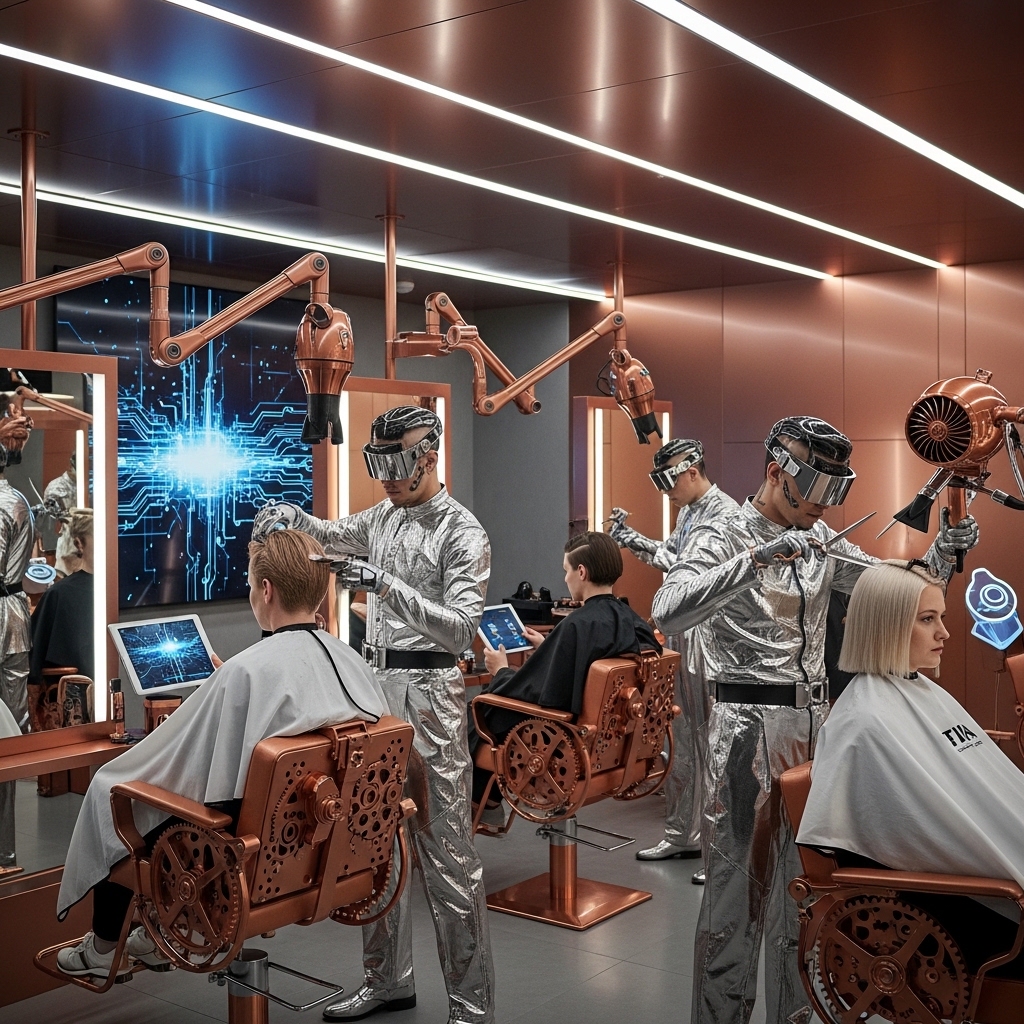
Automation is often framed as a replacement for people. In premium service businesses, that framing is inaccurate.
The real issue is that many shops pay for human capability and then spend it on repetitive, mechanical tasks. That is not “high touch.” It is misallocation.
Consider the typical front desk workload: hours, parking, pricing, availability checks, reschedules, confirmations. These interactions matter, but the majority of them are structured lookups and rules. They are, functionally, database queries.
Paying a human to behave like a search engine dilutes the most valuable asset in the building: hospitality delivered by a real person.
Concierge vs. Clerk
In a high-standard environment, the front desk should not be a scheduling clerk. It should be a concierge function.
- The automated layer handles structured tasks: FAQ responses, availability reads, booking logic, confirmations, and routine intake.
- The human layer handles what machines cannot: warmth, judgment, discretion, de-escalation, and the subtle work of making guests feel known.
This is not a philosophical distinction. It changes the guest experience immediately.
The Cost of Distraction
When one person is forced to cover both the phone channel and the in-person channel, both experiences degrade.
- On the phone: callers feel rushed, misunderstood, or pushed to voicemail during peak periods.
- In the lobby: guests receive fragmented attention, delayed greetings, and a less composed arrival experience.
Separating channels is not “less personal.” It is more deliberate.
Elevate the Role
The objective is not to remove people from the experience. The objective is to reserve people for the moments where people create value.
In premium service businesses, the human touch is expensive by design. It should not be consumed by repetition.
Use automation for the predictable tasks. Preserve human attention for the work that builds trust, loyalty, and reputation.
You should also read:

Gross Revenue Is Activity. Net Revenue Is Performance.
Every business owner sees the same number at the top of the daily report: Total Sales. It is large. It feels validating. It reflects effort. But gross revenue measures activity, not performance. It shows how much money passed through the system. It does not show how much value was retained. If a business records $1,000 in sales but issues $200…
Continue reading...
Strategic Simplification: Why Service Menu Bloat Erodes Performance
Growth often triggers expansion. A new treatment is introduced. A premium tier is added. A bundled package appears. Over time, what began as a focused service offering becomes layered, fragmented, and difficult to navigate. The result is not diversification. It is operational drag. Within most mature service menus are underperforming entries that remain visible but generate minimal contribution. They consume…
Continue reading...
The “What If” Machine: Modeling Strategic Decisions Before You Commit Capital
Appointment-based businesses are governed by high-leverage decisions. Adjust pricing. Modify operating hours. Remove or introduce services. These decisions are often made intuitively. Intuition is useful, but it is not a control system. When the margin for error is thin, miscalculation is expensive. The alternative is simulation. Historical reporting explains what happened. Strategic modeling estimates what will happen if variables change.
Continue reading...
Stop Logging In: Why Decision-Grade Analytics Should Arrive, Not Be Discovered
There is a predictable lifecycle to most analytics platforms. Week one: exploration. Charts are reviewed. Filters are tested. Week four: credentials are forgotten. The failure is not discipline. It is design. Most analytics tools assume the operator has time to investigate, interpret, and translate data into action. Appointment-based businesses do not operate that way. Owners are not analysts. They are…
Continue reading...
Beyond the Script: Why Your Virtual Agent Should Sound Like You
For years, automation meant detachment. Flat prompts. Rigid menus. Synthetic voices that signaled efficiency but not hospitality. In a relationship-driven business, that tone erodes trust. In premium service environments, the phone is not administrative overhead. It is the first expression of the brand. If automation handles that moment, it must reflect the identity of the business, not the limitations of…
Continue reading...